
Understanding the Difference Between Dry and Dehydrated Skin
Many people use "dry" and "dehydrated" skin interchangeably, yet they describe two different problems. Confusing the two can lead to the wrong products, persistent irritation, and a lot of wasted money. For anyone who loves spa rituals, home facials, or simply wants a comfortable, healthy-looking complexion, understanding this distinction is one of the most useful skincare basics. Now consider what actually happens in the skin, how to tell whether yours is dry, dehydrated, or both, and what to do about it with practical, spa-inspired routines you can follow at home or in a professional setting.
Dry vs. dehydrated: what each term really means
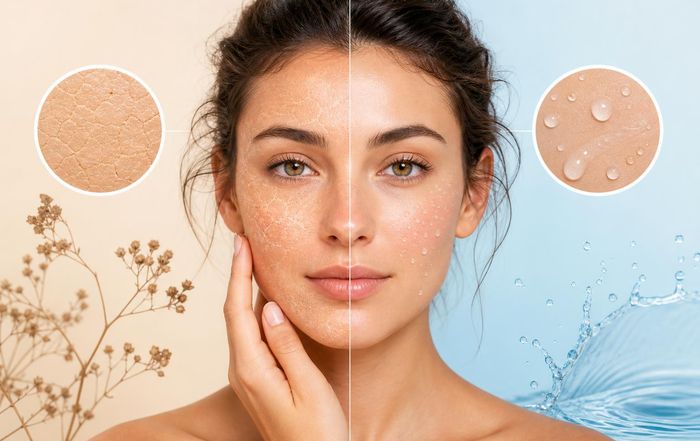
Dermatologists generally define dry skin as a skin type, while dehydrated skin is a temporary condition that can affect any skin type, including oily or acne-prone. That difference shapes everything from your daily routine to the kind of spa treatments that will feel soothing rather than irritating.
Dry skin is primarily about lipids (oil). It produces less sebum than average, so the skin barrier has fewer fats (ceramides, cholesterol, fatty acids) to keep moisture in and irritants out. Dry skin is often genetic and tends to be chronic, though it can worsen with age, climate, and harsh products. It is closely linked with barrier function, and in some people overlaps with conditions such as eczema. Organizations like the American Academy of Dermatology highlight that people with naturally dry skin often need richer, more protective moisturizers and gentler cleansing routines than those with oilier types (https://www.aad.org/).
Dehydrated skin, by contrast, is about water, not oil. It means the skin lacks water in the upper layers, often because of environmental stress, over-exfoliation, or not enough internal and external hydration. Even someone with very oily skin can be dehydrated, which is why a shiny T-zone can still feel tight and uncomfortable. Bodies like the British Association of Dermatologists and other professional groups describe dehydration as a common, reversible state that can improve when the barrier is supported and water loss is reduced (https://www.bad.org.uk/).
In practice, the two can overlap. Someone may have a naturally dry skin type that becomes dehydrated in winter, on flights, or after using strong actives. The key is to notice whether your skin lacks oil, water, or both, and then tailor your care accordingly.
How dry skin behaves: a closer look
Dry skin typically feels rough or tight most of the time, not just in certain seasons or after a long flight. It may show fine, almost powdery flaking, especially around the nose, cheeks, or along the jawline. Unlike dehydrated skin, which can come and go, dry skin tends to be quite consistent throughout the year, though it often worsens in cold or low-humidity climates.
Because dry skin has fewer lipids, its barrier is more fragile. Research summarized by groups such as the National Eczema Association suggests that a compromised barrier loses water more easily and allows irritants to penetrate more readily, which can trigger redness, itching, or eczema flares in susceptible people (https://nationaleczema.org/). In everyday life, that might look like stinging when you apply certain serums, or a tendency to react to fragranced products and foaming cleansers.
Dry skin often appears dull, with barely visible pores and a lack of natural glow. Makeup can catch on flaky patches, and fine lines may look more prominent because there is less surface lipids to smooth and reflect light. On the body, dry skin frequently shows up on the shins, hands, and forearms. If you love spa and salon treatments, you might notice that your skin drinks in oils and body butters and feels immediately relieved by occlusive, balm-like textures.
Lifestyle and environment still matter. Long hot showers, aggressive scrubbing, and heavily fragranced soaps can strip what little oil the skin has. Central heating and air conditioning can compound the problem. But even in ideal conditions, a naturally dry skin type usually needs consistent barrier-supporting care to feel comfortable.
For broader, everyday strategies that complement facial care, readers may find it useful to explore more general health and wellness guidance, since systemic inflammation and stress can aggravate dryness.
How dehydrated skin behaves: what's going on beneath the surface
Dehydrated skin can be trickier to recognize because it is a condition, not a fixed type. It often appears suddenly or fluctuates with seasons, travel, or product changes. The skin may feel tight, especially after cleansing or exposure to wind and sun, yet it can simultaneously look shiny or oily in some areas. Fine "criss-cross" lines that disappear when you press or stretch the skin gently with your fingers are common signs of surface dehydration.
Environmental stress plays a major role. Low humidity, air travel, indoor heating, and high UV exposure all increase transepidermal water loss (TEWL), the process by which water evaporates through the skin. Scientific overviews from organizations such as the International Society of Dermatology and resources like DermNet New Zealand describe how TEWL rises when the barrier is impaired or when the air is very dry, leading to characteristic tightness and dullness (https://www.intsocderm.org/, https://dermnetnz.org/).
Dehydrated skin is also frequently linked to over-cleansing and over-exfoliation. Strong acids, retinoids, and scrubs can all be beneficial when used correctly, but in high concentrations or too frequently they strip the stratum corneum of its natural moisturizing factors and disturb the lipid matrix. This makes it harder for the skin to hold onto water, creating a cycle of tightness, sensitivity, and reactive oiliness as the skin tries to compensate.
Diet and overall hydration also matter. While drinking large amounts of water won't magically "cure" dehydrated skin, chronic low fluid intake, high alcohol consumption, or very low-fat diets can influence the skin's ability to stay supple. Guidance from health authorities such as the World Health Organization and NHS underscores the role of adequate hydration and balanced nutrition for skin and overall health (https://www.who.int/, https://www.nhs.uk/).
Because dehydration is reversible, adjusting routines, environment, and habits can bring relatively quick improvement. For readers interested in broader lifestyle changes that support skin from the inside, related coverage on food and nutrition and fitness can be a helpful complement to topical care.
Simple ways to tell: is your skin dry, dehydrated, or both?
While only a dermatologist can diagnose underlying skin conditions, there are practical ways to distinguish between dryness and dehydration at home. The goal is not to label your skin perfectly, but to understand what it seems to be lacking so you can choose more suitable products and treatments.
If your skin is dry, you are likely to notice that it:
Feels rough, tight, or itchy most of the time, not just occasionally.
Has fine, powdery flakes that persist even when you use hydrating serums.
Rarely looks shiny; pores appear small and barely visible.
Responds well to rich creams, oils, and balms, which bring lasting comfort.
May be associated with a personal or family history of eczema or other dry skin disorders.
If your skin is dehydrated, typical signs include:
Tightness after cleansing or exposure to air-conditioning, even if your skin looks oily.
Fine, superficial lines that look like creasing or "micro-wrinkles," especially when you smile or squint.
Dullness or a "tired" look, sometimes with areas of congestion or breakouts.
Rapid improvement when you introduce humectant ingredients such as hyaluronic acid or glycerin.
Fluctuations with seasons, travel, or after starting new exfoliants or retinoids.
A commonly mentioned "pinch test" involves gently pinching a small area of cheek skin; if it wrinkles easily and is slow to bounce back, some practitioners consider that a sign of dehydration. However, dermatology sources like Mayo Clinic emphasize that such at-home tests are not definitive diagnostics and can be influenced by age and natural elasticity (https://www.mayoclinic.org/). They are better viewed as clues rather than firm evidence.
Many people will discover that their skin is both dry and dehydrated. For example, someone with naturally low oil production who starts using strong exfoliating acids may experience increased tightness, redness, and sensitivity on top of chronic dryness. In that case, the skin needs both lipids and water, along with a gentler routine.
If you are unsure, or if you have persistent redness, itching, or rash-like patches, it is wise to consult a qualified dermatologist. Professional organizations such as the American Academy of Dermatology and European Academy of Dermatology and Venereology provide directories and educational resources that can help you find evidence-based care (https://www.aad.org/, https://www.eadv.org/).
Ingredients that help dry skin: rebuilding the barrier
For dry skin, the priority is to replenish and protect the lipid barrier. This means looking for products that contain a combination of emollients, occlusives, and barrier-repairing ingredients.
Ceramides, cholesterol, and fatty acids are particularly important because they mimic the skin's own lipid structure. Many dermatologist-recommended moisturizers use ratios based on research into how healthy skin maintains its barrier. Resources from institutions such as Harvard Health Publishing and Cleveland Clinic often highlight ceramide-rich creams as a cornerstone of care for dry and eczema-prone skin (https://www.health.harvard.edu/, https://my.clevelandclinic.org/).
Plant oils can also be highly beneficial, especially those rich in linoleic acid, such as evening primrose, safflower, and some forms of sunflower oil. These oils can act as emollients, filling in gaps between skin cells and improving flexibility. However, not every natural oil is suitable for every person; some heavier oils may feel too occlusive or trigger breakouts in those with combination or acne-prone skin.
Occlusive agents like petrolatum, mineral oil, and certain silicones are sometimes misunderstood but have strong evidence for reducing water loss when used appropriately. For very dry or compromised skin, a thin layer of an occlusive ointment over a lighter moisturizer at night can significantly improve comfort. Professional bodies like the National Eczema Association explicitly recognize petrolatum-based products as effective options for barrier support in many patients (https://nationaleczema.org/).
Routine adjustments matter just as much as ingredients. Gentle, low-foam cleansers, tepid rather than hot water, and limiting long showers can prevent further lipid loss. Body-focused spa rituals-such as warm oil massages or rich body wraps-can be especially soothing for dry skin on the body. Readers exploring more holistic rituals might also enjoy broader spa and salon and beauty content that integrates professional treatments with home care.
Ingredients that help dehydrated skin: attracting and holding water
For dehydrated skin, the emphasis shifts to humectants and barrier-friendly formulas that attract and retain water without necessarily adding heavy oil. Humectants are substances that draw water into the outer layers of the skin, and they can be powerful allies when paired with the right moisturizers.
Hyaluronic acid is the most famous example, but glycerin, sorbitol, aloe vera, and polyglutamic acid are also widely used. Dermatology resources, including those from DermNet New Zealand, note that humectants can significantly improve skin hydration when combined with occlusives or emollients that reduce evaporation (https://dermnetnz.org/). Applying a humectant serum to slightly damp skin, then sealing it with a cream or lotion, is a simple, spa-inspired technique to maximize water retention.
Another class of ingredients, known as natural moisturizing factors (NMFs), includes urea, lactic acid in low concentrations, and certain amino acids. These substances occur naturally in healthy skin and help maintain flexibility and smoothness. Formulas that gently replenish NMFs can be especially helpful for dehydration caused by over-cleansing or environmental stress.
However, it is possible to overdo hydration. Very strong acids, high-dose retinoids, or frequent exfoliation in the name of "glow" can backfire, worsening dehydration. If the skin is stinging, burning, or unusually red, most dermatologists recommend simplifying the routine: a gentle cleanser, a hydrating serum, a barrier-supporting moisturizer, and diligent sun protection.
Lifestyle support can also help. Moderating alcohol, getting sufficient sleep, and managing stress all support the skin's repair processes. Wellness-oriented routines such as restorative yoga or mindful breathing before bed can indirectly benefit dehydrated skin by improving sleep quality and lowering stress-related inflammation.
Designing a spa-inspired routine for each concern
Once the difference between dry and dehydrated skin is clear, it becomes easier to build routines that feel like a mini spa treatment rather than a chore. The aim is not an elaborate 12-step ritual, but a thoughtful sequence that respects the skin's needs and fits your lifestyle.
For primarily dry skin, a typical day and night routine might emphasize:
A creamy, non-foaming cleanser that removes impurities without stripping.
A hydrating toner or essence to add a first layer of moisture.
A serum with soothing ingredients (such as niacinamide or panthenol) if tolerated.
A rich, ceramide-based cream or balm, especially at night.
Occasional overnight "slugging" with an occlusive ointment on very dry areas, if your skin tolerates it.
Weekly, you might incorporate a gentle, non-drying mask-such as a cream or oil-based mask-followed by a nourishing facial massage. These kinds of routines echo professional spa practices that focus on barrier repair and comfort. For ideas that extend beyond the face into a full-body ritual, readers may find inspiration in lifestyle and travel features that explore regional spa traditions and self-care retreats.
For primarily dehydrated skin, the focus shifts slightly:
A mild, pH-balanced cleanser, avoiding strong foaming agents where possible.
A hydrating essence or mist applied to damp skin.
A humectant-rich serum with hyaluronic acid, glycerin, or polyglutamic acid.
A lightweight moisturizer that still offers some occlusion to lock in water.
Daily use of broad-spectrum sunscreen, which protects against UV-induced barrier damage.
Weekly, instead of frequent exfoliation, you might choose a hydrating sheet mask or gel mask, especially after travel or sun exposure. If you do exfoliate, opt for low-strength acids or enzyme-based products and limit use to once or twice a week, monitoring your skin's response.
For skin that is both dry and dehydrated, layering is key: humectants first, then barrier-replenishing creams, and finally a more occlusive step in the driest areas. Many people benefit from using richer products at night and lighter textures in the day, especially in hot or humid climates.
Across all routines, sun protection is non-negotiable. UV exposure accelerates barrier breakdown, collagen loss, and pigmentation. Public health agencies like the Centers for Disease Control and Prevention and Cancer Council Australia stress the importance of daily SPF use, protective clothing, and seeking shade as core strategies for skin health (https://www.cdc.gov/, https://www.cancer.org.au/).
When to seek professional help
Most episodes of dryness or dehydration respond well to consistent, gentle care. However, there are times when professional assessment is important. If you experience intense itching, weeping or crusting patches, widespread redness, or pain, these can be signs of eczema, psoriasis, contact dermatitis, or other conditions that require medical treatment rather than cosmetic tweaks.
Sudden, severe changes in the skin-such as thickened plaques, blistering, or unusual patterns of rash-also warrant attention. Dermatologists can use tools such as dermoscopy, patch testing, and, when necessary, biopsies to determine what is happening beneath the surface. They can also prescribe medicated creams or systemic treatments when over-the-counter options are not enough.
For those considering more advanced or clinical-style spa treatments-such as chemical peels, microneedling, or laser therapies-professional guidance is especially valuable if your skin is already dry or dehydrated. An impaired barrier increases the risk of irritation and complications. Many clinics now integrate medical dermatology with aesthetic services, and reputable providers typically assess barrier health before recommending intensive procedures.
Readers interested in the career side of skin health-from becoming an esthetician to working in dermatology clinics or wellness resorts-may find further context in coverage of careers and business within the beauty and spa sectors.
Bringing it together: caring for skin that feels like yours
Understanding the difference between dry and dehydrated skin is ultimately about working with your skin, not against it. Dry skin needs lipids and protection; dehydrated skin needs water and balance. Many people will navigate both issues at different moments in their lives, especially with changes in climate, age, hormones, or lifestyle.
By paying attention to how your skin feels and looks over time-rather than chasing quick fixes-it becomes easier to choose products, spa treatments, and daily habits that genuinely support comfort and resilience. Combining topical care with broader attention to sleep, stress, movement, and nutrition creates a more integrated approach to wellbeing, one that aligns with the bigger themes of wellness, beauty, and lifestyle that many readers value.
If there is lingering uncertainty, or if your skin is persistently uncomfortable, a consultation with a qualified dermatologist or experienced skincare professional can save time, money, and frustration. With the right information and support, the path from tight, flaky, or dull skin to a calmer, more supple complexion becomes far clearer-and often more enjoyable-along the way.
