
Building a Home Gym on a Budget: A Strategic Guide for Health-Focused Professionals
The New Economics of At-Home Fitness
The home gym has evolved from an improvised corner with a few dumbbells into a strategic lifestyle and business decision for health-conscious professionals around the world. As hybrid work patterns continue in the United States, United Kingdom, Germany, Canada, Australia, France, Italy, Spain, Netherlands, Switzerland, and across Asia, Africa, and South America, individuals are rethinking how they invest time and money in their wellbeing. For the fit audience here and its global community of readers who already prioritize fitness, wellness, and health, building a home gym on a budget is no longer a compromise; it is a deliberate, high-ROI choice that integrates physical performance, mental resilience, and lifestyle design.
Industry data from organizations such as the World Health Organization shows that physical inactivity remains a major risk factor for noncommunicable diseases, and yet, many of the barriers cited-time, access, cost, and convenience-are precisely the issues a well-planned home gym can address. Readers who already invest in spa and salon experiences and premium wellness services increasingly recognize that a modest, intelligently curated home training space can amplify the benefits of professional treatments, support recovery, and sustain long-term health. In this context, the question is not whether to build a home gym, but how to do so strategically, sustainably, and affordably.
Defining Clear Objectives Before Spending a Single Dollar
The most cost-effective home gyms begin not with shopping lists but with clarity of purpose. Professionals in New York, London, Berlin, Singapore, Tokyo, Seoul, Bangkok, Johannesburg, São Paulo, and Sydney face different constraints in terms of space, climate, and daily schedules, yet the strategic questions are surprisingly similar. What are the primary goals: fat loss, strength, mobility, mental health, sports performance, or general wellbeing? How many days per week will the space be used, and for how long per session? Will it serve one person or an entire household? The more specific the answers, the more disciplined and efficient the investment.
Research from Harvard T.H. Chan School of Public Health has consistently emphasized the broad health benefits of regular moderate-to-vigorous physical activity, reinforcing the idea that one does not need an elaborate facility to achieve meaningful outcomes. A budget-conscious home gym should therefore be built around movements and modalities that deliver the highest return on health, longevity, and performance for the least financial outlay. For many fans of QikSpa, whose interests span beauty, food and nutrition, and lifestyle, this also means aligning gym design with broader personal values, such as aesthetics, sustainability, and mental wellbeing.
Space Planning: Turning Constraints into Design Advantages
In premium urban markets from Manhattan to Hong Kong, space is often the most significant constraint, yet it can also be the discipline that prevents unnecessary spending. A carefully measured two-by-two-meter area can host an extremely effective training setup if every piece of equipment is chosen for versatility. Professionals who already design calming environments for self-care, such as spa bathrooms or meditation corners, will recognize that the same principles apply to a home gym: clarity, order, minimalism, and intentionality.
Evidence from environmental psychology, including work shared by University College London and other leading institutions, suggests that cluttered spaces increase cognitive load and stress, while well-organized environments support adherence and performance. A budget home gym therefore benefits from thoughtful zoning: one area for strength, one for mobility, and one for recovery, even if these are symbolically separated rather than physically distinct. Simple additions such as a full-length mirror, a small plant, or soft indirect lighting can transform a low-cost setup into a space that feels aligned with the restorative ambiance associated with modern wellness retreats and high-end facilities highlighted across QikSpa.
Prioritizing Foundational Equipment with Maximum Versatility
The core principle for building a budget-friendly home gym is to invest in equipment that enables a wide range of fundamental movement patterns: squatting, hinging, pushing, pulling, rotating, and carrying. Experts at organizations such as the American College of Sports Medicine emphasize that consistent resistance training and cardiovascular work can be achieved with surprisingly minimal equipment, provided it is used intelligently and progressively. For readers in Europe, North America, and Asia, where supply chains and online marketplaces are mature, it is now possible to source durable, versatile tools at relatively modest cost.
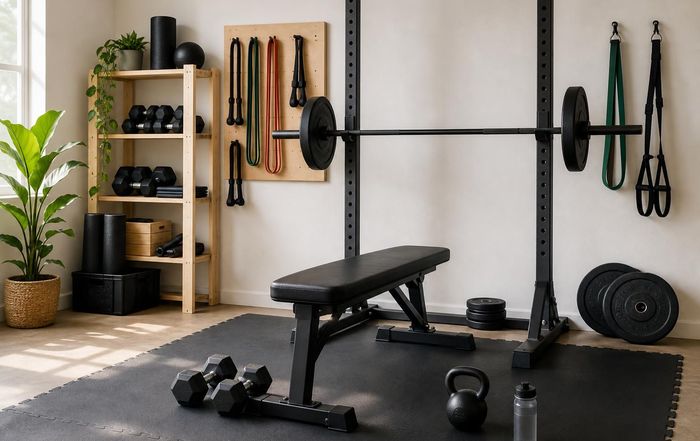
Adjustable dumbbells, resistance bands, a sturdy adjustable bench, and a pull-up bar form the backbone of many high-performing home gyms. These tools allow users to perform full-body strength training, interval conditioning, and rehabilitation exercises without the footprint or expense of large machines. For those in Germany, Nordic countries such as Sweden, Norway, Finland, and Denmark, or in Japan and South Korea, where minimalist living is common, foldable or wall-mounted solutions further increase the efficiency of a small space. By focusing on multi-purpose tools rather than single-use gadgets, individuals avoid the trap of impulse purchases that clutter both the room and the budget.
The Strategic Role of Bodyweight and Minimal-Equipment Training
One of the most underappreciated aspects of budget home gym design is the power of bodyweight training. Organizations such as Mayo Clinic and Cleveland Clinic have repeatedly highlighted that push-ups, squats, lunges, planks, and other calisthenics can produce significant strength and cardiovascular benefits, especially when programmed progressively. For professionals in South Africa, Brazil, Malaysia, or New Zealand, where outdoor training is often feasible year-round, bodyweight exercises can extend beyond the home into parks, terraces, and beaches, further reducing the need for expensive equipment.
Within the context of QikSpa's broader wellness ecosystem, bodyweight training aligns naturally with practices such as yoga and mobility work, creating a holistic movement routine that supports posture, joint health, and stress management. For individuals concerned with fashion and physical aesthetics, this approach also offers a balanced way to build lean muscle, improve symmetry, and enhance overall physique without the joint stress sometimes associated with maximal loading. When paired with structured programming from reputable sources, such as guidelines from NHS UK or Health Canada, bodyweight training becomes a sophisticated, evidence-based tool rather than a fallback option.
Integrating Yoga, Mobility, and Recovery into the Home Gym
A home gym designed for 2026 must reflect a broader understanding of health that goes beyond muscle and cardiovascular conditioning. The global rise of yoga, breathwork, and mobility practices-in India, Thailand, Singapore, United States, and across Europe-has underscored the importance of recovery, nervous system regulation, and mental clarity. For QikSpa readers who already value spa therapies, massage, and holistic treatments, integrating these elements into a home gym is not a luxury; it is a necessity for sustainable performance and injury prevention.
A simple, budget-friendly yoga and recovery zone might include a high-quality mat, a pair of blocks, a strap, and perhaps a foam roller, all of which require minimal storage space. Guidance from organizations such as Yoga Alliance and resources from platforms like Mindful.org show how even short, daily mobility and mindfulness sessions can reduce perceived stress, improve sleep quality, and enhance focus. By dedicating a corner of the home gym to these practices, individuals create a micro-sanctuary that echoes the restorative environments they may seek out in professional wellness settings, reinforcing the synergy between at-home routines and the curated experiences featured on QikSpa.
Nutrition, Recovery, and the Broader Wellness Ecosystem
A budget home gym delivers its highest return when it is integrated with thoughtful nutrition and recovery strategies. Leading authorities such as the Academy of Nutrition and Dietetics and Dietitians of Canada emphasize that training adaptations are heavily influenced by protein intake, micronutrient sufficiency, hydration, and sleep quality. For executives, entrepreneurs, and professionals who read QikSpa's content on food and nutrition and wellness, this means that the home gym should be viewed as one component of a broader personal performance system rather than an isolated project.
Thoughtful design might include placing a water filter, shaker bottle, or small storage area for healthy snacks near the gym space to reinforce behavioral cues. Simple routines-such as a post-workout protein shake, a brief stretching sequence, and a few minutes of breathing exercises-can create a ritual that signals both physical and psychological transition, especially for those working from home. Resources from organizations like the National Sleep Foundation further illustrate how timing of exercise and nutrition impacts sleep architecture, which in turn influences mood, cognitive function, and long-term health. A budget gym, when aligned with these insights, becomes a sophisticated wellness hub rather than a collection of equipment.
Digital Coaching, Apps, and Technology Without Overspending
The explosion of digital fitness platforms since the early 2020s has democratized access to high-quality coaching, yet it has also created a risk of subscription overload. In 2026, the most financially savvy home gym owners are highly selective about the technology they adopt, focusing on solutions that genuinely enhance adherence and outcomes. Reputable health organizations such as the U.S. Centers for Disease Control and Prevention and National Institutes of Health provide free or low-cost resources on physical activity guidelines, while numerous evidence-informed apps offer structured programs for strength, mobility, and cardio at a fraction of the cost of in-person training.
For professionals in Silicon Valley, London, Berlin, Toronto, and Melbourne, where tech adoption is high, the challenge is to resist the allure of expensive, proprietary ecosystems unless they deliver clear, measurable value. A simple wearable for heart rate tracking, a basic interval timer, and a well-chosen app can be more than sufficient to guide effective home training. The key is to ensure that technology remains a servant rather than a master, supporting consistent behavior rather than driving constant novelty and distraction. Within the QikSpa community, where readers are already discerning about digital wellness solutions, this balanced approach aligns with a broader preference for intentional, high-quality experiences over indiscriminate consumption.
Sustainable and Ethical Choices in Home Gym Design
Sustainability has become a defining concern for many health-oriented consumers in Europe, Asia-Pacific, and North America, and this extends naturally to the way home gyms are built and maintained. For folks who explore sustainable living insights and global trends on QikSpa, the question is not only how to save money but also how to reduce environmental impact and support ethical supply chains. This might involve purchasing second-hand equipment, choosing products made with recycled materials, or supporting brands that publish transparent sustainability reports.
Guidance from organizations such as the UN Environment Programme and World Economic Forum highlights the importance of circular economy principles, which encourage reuse, repair, and responsible disposal. In practical terms, this can mean refurbishing an old bike trainer instead of buying a new cardio machine, or selecting durable, modular equipment that can be reconfigured or resold if circumstances change. For professionals in Scandinavia, Netherlands, and Switzerland, where sustainable design is deeply embedded in culture, these choices feel intuitive; however, the same principles are increasingly embraced in Asia, Africa, and South America as part of a global movement toward responsible consumption. A budget home gym built with these values not only saves money but also aligns with a deeper sense of purpose and stewardship.
Gender, Inclusivity, and the Home Gym as a Space of Empowerment
For many women across United States, United Kingdom, India, Japan, South Korea, Brazil, South Africa, and beyond, commercial gyms have historically been associated with intimidation, time pressure, or lack of privacy. The rise of the home gym has therefore taken on a broader social meaning as a tool for autonomy and empowerment. Within the women-focused content on QikSpa, this shift is reflected in increasing interest in strength training, performance, and long-term health rather than narrow aesthetic goals alone.
Organizations such as UN Women and leading public health bodies have emphasized the importance of enabling women to engage in regular physical activity without structural or cultural barriers. A thoughtfully designed home gym, even on a modest budget, can provide a safe, flexible environment for strength training, high-intensity intervals, yoga, or rehabilitation after pregnancy or injury. For busy professionals balancing careers, caregiving, and personal ambitions, the ability to train effectively at home, on their own schedule, can be transformative. This inclusive perspective also extends to older adults, individuals with disabilities, and those in regions where gym access is limited, reinforcing the home gym as a democratizing force in global health.
Positioning the Home Gym Within a Holistic Lifestyle Strategy
For the QikSpa audience, building a home gym on a budget is not an isolated project; it is one component of a broader lifestyle architecture that includes travel, international perspectives, career development, and business strategy. Executives flying regularly between New York, London, Dubai, Singapore, and Hong Kong may use their home gym as an anchor for circadian rhythm regulation and jet lag management. Entrepreneurs scaling wellness ventures may treat their personal training space as a laboratory for testing routines, products, and recovery protocols that could later be integrated into client offerings or hospitality concepts.
Resources from organizations such as the World Economic Forum and OECD increasingly frame employee wellbeing and mental health as core business priorities rather than peripheral benefits. In this context, professionals who invest in their own affordable yet effective home gyms are not indulging in a private luxury; they are building personal resilience that directly influences leadership capacity, creativity, and long-term productivity. The same disciplined thinking that guides capital allocation in a corporate context can be applied to designing a home gym: define objectives, assess constraints, prioritize high-leverage investments, and measure outcomes over time.
From Concept to Reality: A Practical, High-Trust Roadmap
Ultimately, building a home gym on a budget in 2026 is an exercise in strategic design, not in compromise. By clarifying goals, respecting spatial constraints, prioritizing versatile equipment, and integrating bodyweight, yoga, and recovery practices, individuals can create an environment that rivals far more expensive setups in effectiveness. When this space is supported by evidence-based nutrition, intelligent use of technology, and a commitment to sustainability and inclusivity, it becomes a powerful expression of personal values as well as a practical tool for health.
For the top community connected online here, from wellness enthusiasts in North America and Europe to emerging professionals in Asia, Africa, and South America, the message is consistent: a high-quality training environment is within reach, regardless of budget, provided decisions are made with care, intention, and informed insight. By drawing on trusted resources such as the World Health Organization, American College of Sports Medicine, Mayo Clinic, and other leading institutions, and by aligning those insights with the curated perspectives available across QikSpa's wellness platform, readers can move confidently from aspiration to implementation.
In doing so, the home gym becomes more than a room or a corner; it becomes a daily statement of commitment to health, performance, and longevity, integrated seamlessly with the spa-level self-care, global outlook, and sophisticated lifestyle that define the QikSpa audience in 2026.
