
Yoga Poses for Better Sleep Quality in a 24/7 World
In 2026, as global professionals navigate an increasingly connected, always-on economy, sleep has quietly emerged as one of the most critical determinants of performance, resilience, and long-term health. For the audience of QikSpa-executives, entrepreneurs, wellness practitioners, and high-performing individuals across North America, Europe, Asia, Africa, and South America-the question is no longer whether sleep matters, but how to consistently achieve deep, restorative rest without sacrificing ambition, mobility, or lifestyle. Within this context, yoga has evolved from a niche practice into a strategic tool for sleep optimization, mental clarity, and emotional balance, with specific poses and sequences now being integrated into personal routines, corporate wellness programs, and hospitality experiences worldwide.
This article explores how targeted yoga poses can measurably improve sleep quality, why they are particularly relevant to modern professionals, and how QikSpa is positioning itself as a trusted hub for integrating sleep-focused yoga into a broader ecosystem of spa, salon, health, beauty, fitness, and lifestyle solutions. It draws on current research, clinical guidance, and global best practices while maintaining a practical lens for implementation at home, in the office, and on the move.
The Strategic Value of Sleep in Modern Business and Lifestyle
Sleep is no longer framed merely as rest; it is increasingly regarded as a strategic asset for cognitive performance, decision-making, creativity, and emotional regulation. Organizations such as Harvard Medical School highlight how chronic sleep deprivation undermines productivity, increases error rates, and elevates health risks; readers can explore the broader health implications through resources like the Harvard Health Publishing sleep center. Meanwhile, the World Health Organization continues to emphasize the role of adequate sleep as a pillar of non-communicable disease prevention, alongside nutrition, physical activity, and mental health; more background can be found via the WHO's guidance on healthy living.
For professionals in the United States, United Kingdom, Germany, Canada, Australia, and other leading economies, the convergence of long working hours, digital overload, and global time-zone collaboration has normalized late-night screen exposure and irregular sleep patterns. In high-growth regions such as Singapore, South Korea, China, and India, the pressure to remain constantly available across platforms has accelerated similar trends. Across these markets, sleep is being reframed not as a passive state but as a proactive investment, and yoga-particularly evening and pre-sleep practices-has become a key modality for those seeking non-pharmacological solutions.
By curating sleep-focused content across its health, wellness, and lifestyle verticals, QikSpa is helping readers understand how sleep quality intersects with broader wellbeing strategies. Those seeking foundational context on holistic health can explore the platform's perspective on health and wellness, where sleep consistently emerges as a central theme.
Why Yoga Works for Sleep: Physiology, Psychology, and Habit Formation
Yoga's impact on sleep is not merely anecdotal; it is grounded in physiological mechanisms that influence the nervous system, hormonal balance, and muscular tension. Research summarized by institutions like the National Institutes of Health suggests that regular yoga practice can improve sleep efficiency, reduce sleep latency, and alleviate insomnia symptoms, particularly in adults experiencing stress or anxiety; readers can review broader complementary health perspectives via the NIH National Center for Complementary and Integrative Health.
From a physiological standpoint, gentle yoga, especially in the evening, helps shift the body from a sympathetic "fight or flight" state to a parasympathetic "rest and digest" state, which is essential for falling asleep and staying asleep. Slow, diaphragmatic breathing practiced in many yoga poses stimulates the vagus nerve, reduces heart rate, and lowers blood pressure, supporting the body's transition into a calmer state. Muscularly, long-held, low-intensity stretches help release tension accumulated during prolonged sitting, travel, or high-intensity training, which often manifests as tight hips, shoulders, and lower back-areas that can subtly disrupt comfort in bed.
Psychologically, yoga poses for sleep create a structured ritual that signals to the brain that the day is ending. This aligns with guidance from organizations such as the National Sleep Foundation, which emphasizes the importance of consistent pre-sleep routines and wind-down practices for improved sleep quality; more details can be explored through their insights on healthy sleep habits. When integrated with mindful breathing and non-judgmental awareness, yoga also helps reduce rumination and mental overactivity, both of which are strongly associated with difficulties in falling asleep and nighttime awakenings.
For readers seeking to embed yoga into a broader fitness and lifestyle strategy, QikSpa offers complementary coverage on fitness and yoga, enabling individuals to design routines that support both performance and recovery.
Foundational Yoga Principles for Better Sleep
Before exploring specific poses, it is essential to understand several principles that determine whether a yoga routine will genuinely support sleep quality rather than inadvertently stimulate the nervous system.
First, intensity must be carefully managed. Dynamic, heat-building practices such as vigorous vinyasa or power yoga are generally best reserved for earlier in the day, as they can elevate heart rate and core temperature, making it harder to fall asleep. In contrast, evening routines benefit from slower, restorative styles that emphasize longer holds, supported postures, and gentle transitions. Guidance from organizations like Yoga Alliance reinforces the importance of adapting intensity to time of day and individual needs; professionals can review evolving standards and best practices via the Yoga Alliance website.
Second, breath is central. Controlled breathing techniques, particularly those that lengthen the exhale, are strongly associated with activation of the parasympathetic nervous system. Practices such as simple diaphragmatic breathing or gentle ratio breathing can be integrated into almost any pose, turning physical postures into vehicles for nervous system regulation. Readers interested in the broader science of breathwork can explore overviews from institutions such as Cleveland Clinic, which provides accessible explanations of deep breathing for relaxation.
Third, environment and ritual matter. A darkened, quiet, and slightly cooler space, free from digital interruptions, enhances the effectiveness of sleep-oriented yoga. This mirrors broader sleep hygiene recommendations from resources like the Mayo Clinic, which outlines practical steps for improving sleep habits. Integrating yoga into a consistent pre-bed ritual-perhaps following a warm shower or spa-style routine-helps anchor the association between these practices and rest, an area where QikSpa's expertise in spa and salon experiences becomes particularly relevant.
Finally, consistency is more impactful than duration. Even 10 to 20 minutes of gentle yoga practiced most evenings can accumulate significant benefits over time, especially when combined with attention to nutrition, light exposure, caffeine timing, and overall lifestyle, topics that are extensively explored in QikSpa's coverage of food and nutrition and lifestyle.
Key Yoga Poses That Support Deeper, More Restorative Sleep
While there is no single universal sequence suitable for everyone, certain yoga poses have consistently been recommended by experienced teachers, physiotherapists, and sleep specialists as particularly supportive of pre-sleep relaxation. These poses are accessible to most fitness levels and can be adapted for different body types, ages, and mobility ranges, making them relevant to QikSpa's international readership from the United States and Canada to Japan, Thailand, South Africa, Brazil, and beyond.
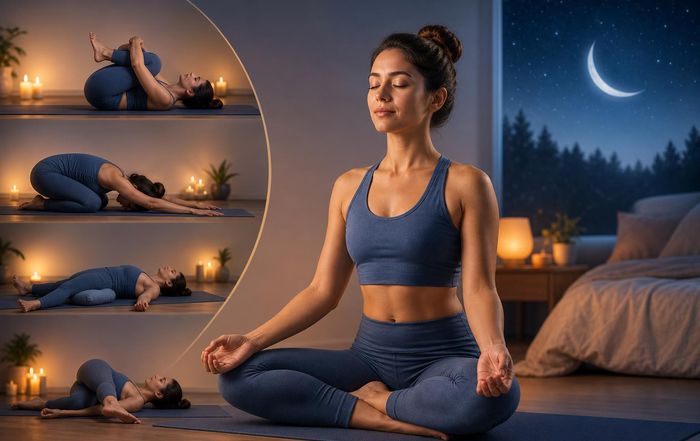
One of the most effective starting points is a gentle Child's Pose (Balasana). This posture, where the practitioner kneels and folds the torso forward over the thighs with arms extended or resting by the sides, encourages a sense of grounding and introspection. It passively stretches the back, hips, and ankles while allowing the forehead to rest on the mat or a pillow, which can have a calming effect on the nervous system. Clinicians and yoga therapists often recommend combining Child's Pose with slow nasal breathing, focusing on lengthening the exhale to deepen the relaxation response.
Another valuable posture is Legs-Up-the-Wall Pose (Viparita Karani). In this pose, the practitioner lies on the back with legs extended vertically against a wall or supported by a piece of furniture, allowing blood and lymphatic fluid to gently flow from the lower extremities toward the torso. This mild inversion can relieve swelling in the feet and legs, ease lower back tension, and create a sense of lightness after long periods of sitting or standing. Institutions like Johns Hopkins Medicine have highlighted yoga's role in stress reduction and sleep improvement, and poses such as this are often included in restorative routines; interested readers can learn more about yoga and stress.
A third pose frequently used in sleep-focused sequences is Reclining Bound Angle Pose (Supta Baddha Konasana). Lying on the back with the soles of the feet together and knees gently opened to the sides, supported by cushions or bolsters, this posture opens the hips and chest while encouraging deep relaxation. When combined with a light blanket and dim lighting, it can create a spa-like, nurturing environment at home, reinforcing the sensory associations between comfort, safety, and sleep. For women in particular, including those navigating hormonal transitions such as perimenopause or postnatal recovery, this pose can be especially soothing; QikSpa explores these gender-specific wellness considerations in its dedicated women section.
Gentle forward folds, such as Seated Forward Bend (Paschimottanasana), also play an important role in sleep-enhancing yoga. When performed with a soft bend in the knees and the torso resting on a cushion or bolster, this pose lengthens the back body without strain, while the act of folding inward symbolically encourages withdrawal from external stimuli. Experts at organizations like Sleep Foundation note that calming pre-bed routines that incorporate stretching and relaxation can facilitate the transition to sleep, and forward folds are often integrated into such protocols; readers can explore more about relaxation techniques before bed.
Finally, no sleep-oriented yoga practice is complete without Corpse Pose (Savasana), a seemingly simple posture in which the practitioner lies flat on the back, arms and legs comfortably extended, eyes closed, and body fully supported. Despite its apparent simplicity, Savasana is a sophisticated practice of conscious relaxation, training the mind to remain aware while the body releases residual tension. When practiced immediately before bed, perhaps on the mattress itself, it becomes a bridge between wakefulness and sleep, especially when paired with a guided body scan or progressive muscle relaxation. Mental health organizations such as Mind in the United Kingdom emphasize the role of relaxation in managing anxiety and improving sleep, and Savasana is one of yoga's most direct contributions to this domain; more context is available through their resources on relaxation exercises.
Integrating Yoga for Sleep into Daily Routines Across Regions and Lifestyles
For the global audience served by QikSpa, the challenge is rarely a lack of information, but rather how to integrate practices like yoga into demanding schedules that span time zones, travel commitments, and family responsibilities. The key lies in designing routines that are realistic, adaptable, and aligned with cultural and environmental contexts from New York and London to Berlin, Singapore, Tokyo, and Cape Town.
Professionals in high-pressure sectors-finance in Switzerland, technology in the United States, creative industries in France and Italy, or consulting in the Netherlands and Denmark-often benefit from micro-practices that can be performed in small hotel rooms, airport lounges, or home offices. A shortened sequence of Child's Pose, Legs-Up-the-Wall, and Savasana, practiced for 10 to 15 minutes with dimmed lights and devices on airplane mode, can become a non-negotiable anchor before bed, even during intense travel or project phases. For those working irregular shifts in healthcare, hospitality, or global services, these poses can be adapted to pre-sleep routines regardless of the clock, reinforcing circadian cues through consistency of practice.
For readers who already maintain structured fitness or athletic programs, particularly in markets such as Australia, New Zealand, and South Korea where outdoor sports and training are prevalent, sleep-focused yoga can be positioned as a recovery tool rather than an additional obligation. A gentle sequence performed after an evening workout or as part of a cooldown can help reduce muscle soreness, calm the nervous system, and protect sleep depth, thereby enhancing overall performance. QikSpa's content on fitness and wellness offers guidance on balancing high-intensity training with restorative practices.
Culturally, yoga for sleep is being adapted to different traditions and preferences. In Japan and Scandinavia, where minimalist aesthetics and emphasis on calm environments are prominent, sleep-oriented yoga routines often integrate elements of ambient soundscapes, soft textiles, and low lighting that align with local design sensibilities. In Brazil, South Africa, and other vibrant cultures, individuals may choose to precede yoga with light music or movement to transition from social evenings into quieter, introspective time. Across these regions, QikSpa's international coverage at international captures emerging trends in how wellness practices like yoga are contextualized within local lifestyles.
The Role of Nutrition, Beauty, and Spa Rituals in Sleep-Focused Yoga
Yoga for better sleep does not exist in isolation; it is most effective when integrated with complementary practices in nutrition, beauty, and spa-style self-care, all of which are central pillars of the QikSpa ecosystem. From a nutritional perspective, timing and composition of evening meals can significantly influence sleep quality, and yoga can be scheduled to support digestion and relaxation without placing strain on the body. Resources from organizations like Harvard T.H. Chan School of Public Health explain how dietary patterns affect sleep and metabolic health; readers can explore these connections through their overview of nutrition and health.
When paired with gentle yoga, light, balanced dinners that emphasize whole foods, healthy fats, and moderate carbohydrates can support stable blood sugar overnight, reducing the likelihood of nocturnal awakenings. Herbal teas and caffeine-free beverages may also complement pre-sleep routines, while avoiding heavy, spicy, or very late meals aligns with both yoga principles and broader sleep hygiene guidance. QikSpa's dedicated food and nutrition content provides practical ideas for aligning evening nutrition with restorative sleep.
On the beauty and spa side, rituals such as warm baths, facial massages, and aromatherapy can significantly enhance the sensory environment for sleep-oriented yoga. Gentle self-massage using natural oils before or after a short yoga sequence can improve circulation, release muscular tension, and promote a sense of being cared for-an important psychological factor for those experiencing chronic stress. Dermatological resources like American Academy of Dermatology offer insights into how nighttime routines support skin repair and overall appearance; interested readers can learn more through their guidance on nighttime skincare.
By integrating these elements, QikSpa aims to help readers design holistic evening rituals that combine yoga poses, spa-inspired care, and beauty routines, as explored in its beauty and spa and salon sections. This integrated approach recognizes that sleep quality is influenced not just by physical posture, but also by how individuals feel about themselves and their environment at the end of the day.
Sustainability, Travel, and the Future of Sleep-Centric Wellness
As sustainability and responsible living become central priorities for consumers and businesses alike, there is growing interest in how sleep-focused yoga can be practiced and promoted in ways that align with environmental and social responsibility. Organizations such as the United Nations Environment Programme emphasize the importance of sustainable lifestyles that balance personal wellbeing with planetary health; readers can explore this perspective through UNEP's insights on sustainable living.
From a practical standpoint, yoga's minimal equipment requirements-often just a mat and perhaps a bolster or pillow-make it inherently low-impact compared with more resource-intensive wellness practices. When individuals choose sustainably produced mats, organic textiles, and natural oils, they extend the ethos of mindful living into their sleep routines. For frequent travelers, especially those navigating routes between Europe, Asia, North America, and the Middle East, portable yoga routines for sleep can reduce reliance on energy-intensive spa facilities while still delivering meaningful recovery. QikSpa's coverage on sustainable living and travel explores how sleep-friendly practices can be integrated into eco-conscious itineraries and hospitality experiences.
Looking ahead, hospitality brands, airlines, and corporate wellness providers are increasingly incorporating yoga for sleep into their offerings. Major hotel groups across the United States, United Kingdom, Germany, and Singapore now provide in-room yoga guides, sleep kits, and on-demand video content focused on evening relaxation. Airlines serving long-haul routes between Europe, Asia, and North America are experimenting with onboard stretching and breathing programs designed to mitigate jet lag and support better sleep in transit. Thought leaders at organizations such as McKinsey & Company have highlighted sleep and wellbeing as critical components of resilient workplaces; readers can explore broader perspectives on employee wellbeing and how sleep-focused initiatives are gaining traction.
In this evolving landscape, QikSpa is positioned as a digital gateway that connects individuals and businesses with practical, evidence-informed insights on spa, health, wellness, beauty, fitness, and lifestyle, with sleep-focused yoga as a recurring theme. Its business and careers sections speak to leaders and professionals who recognize that supporting employees' sleep is not simply a perk but a strategic imperative.
How QikSpa Helps Readers Turn Insight into Action
For a global audience seeking to translate knowledge into daily practice, QikSpa serves as a trusted, experience-driven platform that synthesizes international best practices in spa, wellness, beauty, fitness, and sustainable living. By curating expert perspectives on yoga poses for sleep, sharing regionally relevant insights from Europe, Asia, North America, Africa, and South America, and aligning content with the lived realities of high-performing professionals, the platform enables readers to design evening routines that are both effective and deeply personal.
Individuals exploring sleep-focused yoga for the first time can begin with foundational guidance in the yoga and wellness sections, then layer in complementary practices from beauty, food and nutrition, and lifestyle. Those with more advanced practices, or with responsibilities in corporate strategy, hospitality, or health services, can turn to business and international coverage to understand how sleep-oriented yoga is being integrated into global wellness offerings and workplace policies.
Ultimately, as the world moves deeper into an era defined by constant connectivity and rapid change, the ability to disconnect at night, calm the nervous system, and enter deep, restorative sleep will increasingly distinguish not just healthier individuals, but also more sustainable organizations and societies. Yoga poses for better sleep quality offer a practical, accessible, and globally adaptable pathway to this goal. By providing informed, trustworthy, and actionable guidance, QikSpa is helping its readers transform the simple act of going to bed into a powerful daily ritual of recovery, resilience, and renewal, wherever in the world they may be.
