
What to Wear to a Spa (and What to Leave at Home)!
For many people, the most stressful part of a spa day happens before they even arrive: standing in front of a wardrobe wondering what on earth to wear. Dress too casually and you may feel underdressed in a luxury setting; arrive in full makeup and jewelry and you may spend half the time worrying about smudges and lost earrings. The good news is that most spas are designed so that you can relax in simple, comfortable clothing and let the environment do the rest. Understanding a few basics about spa etiquette, hygiene, and practicality can help you pack light, feel at ease, and focus on the experience rather than your outfit.
Because spa cultures vary across countries and types of facilities, it also helps to know how expectations differ between, for example, a North American day spa, a hotel spa in Europe, a Korean jjimjilbang, or a traditional Japanese onsen. With a little preparation, it is easy to choose clothing that respects local customs, supports your health and comfort, and still feels like "you."
In this rather fashionable guide, the focus is on what to wear to a spa, what to bring in your bag, and what is usually better left at home so your visit feels like a genuine break from daily life rather than an extension of it. Readers who are also rethinking their broader wellness habits may find it helpful to explore related daily guidance on wellness routines, health, and spa and salon culture for a more holistic reset.
What Most Spas Provide (So You Don't Overpack)
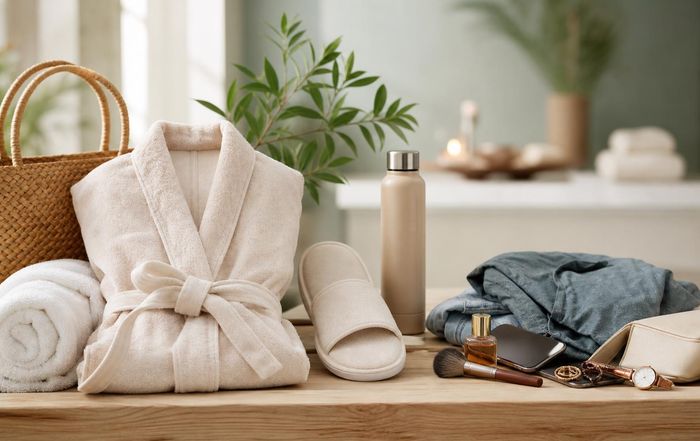
A practical starting point for deciding what to wear is understanding what you typically do not need to bring. Many mid-range and upscale spas worldwide provide a basic set of items: a robe, towels, disposable or washable slippers, and in some cases disposable underwear for body treatments. Hotel and resort spas often include these items in the treatment price, while smaller day spas may charge a modest rental fee. Checking the spa's website or calling ahead remains the most reliable way to know what will be waiting for you; many reputable spa operators publish their policies clearly, and larger hotel brands often outline spa etiquette on their main brand sites, wellness pages, or through their spa partners.
In most Western-style spas, guests are encouraged to change into a robe and slippers upon arrival and wear these between treatments, in lounges, and around pool areas. In some European spa towns, such as Baden-Baden in Germany or Bath in the UK, the robe is essentially the uniform of relaxation, and guests move between saunas, steam rooms, and relaxation rooms in spa-issued garments. In contrast, some traditional bathhouses in East Asia may expect guests to wear facility-provided cotton sets or to bathe nude, with strict rules about what can be brought into wet zones. Understanding this helps avoid overpacking swimwear or loungewear that will never leave your locker.
Because the spa will usually provide towels and robes, it is rarely necessary to bring your own unless you have specific fabric sensitivities or sustainability concerns. If you prefer organic or hypoallergenic fabrics, you might choose to bring a lightweight robe or large cotton wrap, but it is worth confirming with the spa that outside textiles are allowed for hygiene reasons. Readers interested in more sustainable choices may also want to explore broader lifestyle changes, from fabrics to self-care habits, via resources on sustainable living and lifestyle.
What to Wear on the Way to the Spa
What you wear to travel to the spa should be simple, comfortable, and easy to change out of. Think of your arrival outfit as a transitional layer between everyday life and the spa environment rather than part of the spa experience itself. For many people, this means loose, breathable clothing such as soft joggers, a relaxed dress, or yoga pants and a T-shirt. Fabrics like cotton, bamboo, or modal tend to feel better after treatments, particularly if you have had oils, scrubs, or wraps applied to your skin. Tight jeans, constrictive shapewear, or stiff tailoring can feel jarring after a deep massage, and some therapists report that clients who change back into tight clothing too quickly may experience more post-massage soreness.
Climate and culture also matter. In warm or tropical areas, light layers and sandals are usually sufficient and make it easy to slip into spa footwear. In colder climates, it is still wise to wear soft base layers underneath heavier coats, so that your body does not go from heated treatment rooms to freezing temperatures without a buffer. If you are combining your spa visit with a workday or social event, consider bringing a second, more relaxed outfit for after your treatments so you are not forced back into restrictive clothing immediately.
From a wellness perspective, it can be helpful to think of your travel outfit as part of a ritual that cues your body and mind toward rest. Just as you might choose specific clothes for yoga or fitness, having a "spa day uniform" of soft, simple pieces can signal that it is time to slow down. This does not require new purchases; often, your most worn-in loungewear or a breathable dress you already own will feel far more luxurious than anything stiff or formal.
Swimwear and Water Facilities: How Much Coverage Is Right?
If the spa includes pools, hot tubs, hydrotherapy circuits, or flotation experiences, swimwear becomes a central part of what you wear. In most day spas in North America, the UK, and many hotel spas globally, a standard swimsuit is expected in shared wet areas, unless the spa is explicitly clothing-optional. This can include one-piece suits, bikinis, or swim shorts, but modesty and practicality both matter. Thin straps, secure closures, and fabrics that stay opaque when wet help prevent awkward moments and allow you to move comfortably between facilities. For men and people who prefer more coverage, fitted swim shorts or modest trunks are usually acceptable; loose beach shorts may be less comfortable in whirlpools or hydrotherapy jets.
In parts of continental Europe, mixed-gender saunas and nude zones are more common, particularly in Germany, Austria, and Scandinavia. Some wellness complexes explicitly ban swimwear in certain saunas for hygiene reasons, while requiring it in pools. Official tourism and health bodies in these countries, such as the German National Tourist Board at https://www.germany.travel/ or national health ministries, often provide cultural context for these practices. If you are visiting such facilities for the first time, reading their etiquette guidelines carefully is essential; wearing a swimsuit in a nude-only sauna can be as uncomfortable for others as nudity might feel for you in a swimsuit-only environment.
In East Asian bath cultures, expectations differ again. Japanese onsen typically require guests to bathe nude in gender-segregated pools, with strict rules about cleanliness and towel use, which are outlined by organizations such as the Japan National Tourism Organization at https://www.japan.travel/. Korean jjimjilbangs often provide cotton shorts and shirts for dry sauna areas, while nude bathing is common in gender-separated baths. In these settings, your own clothing is mainly worn in public lounges or sleeping rooms, and the facility's garments are used inside spa zones.
Wherever you are, the best approach is to choose swimwear that you feel physically and emotionally comfortable in, while respecting local norms. If you are unsure whether your bikini is too revealing for a particular spa, err on the side of a more modest one-piece or pair a bikini top with high-waisted bottoms. For people who cover for religious or personal reasons, modest swimwear such as burkinis is increasingly accepted in many spa and hotel pools, although regulations can vary by country and operator. When in doubt, confirm policies in advance, especially when planning spa days as part of international travel.
Underwear, Robes, and During-Treatment Clothing
What you wear during treatments themselves is one of the most common areas of confusion. For massages and body treatments at Western-style spas, the general rule is that you undress to your comfort level in a private room and lie under a sheet or towel; therapists are trained to preserve modesty through professional draping techniques. Some guests choose to remove all undergarments, while others prefer to keep underwear on. Many spas also offer disposable underwear or modesty garments for scrubs, wraps, and wet treatments, which can be helpful if you do not want your own clothing to come into contact with oils or products.
For facials, you will typically be asked to remove tops but can keep bottoms on, with a towel or wrap placed over the chest. Wearing a non-bulky sports bra or bralette that can be easily unclasped or moved aside can make it easier for the therapist to work around your neck and shoulders if needed. In some medical or wellness centers where treatments are more clinical-such as physiotherapy, lymphatic drainage, or dermatological procedures-specific garments or gowns may be provided, and staff should explain exactly what to remove and why. Organizations such as the American Massage Therapy Association at https://www.amtamassage.org/ and the International Spa Association at https://experienceispa.com/ provide general guidance on professional standards that many reputable spas follow.
Robes are usually worn to and from treatment rooms, lounges, and sometimes in café areas within the spa. If you prefer more coverage, especially in co-ed spaces, you can ask for a larger robe or wear lightweight leggings or shorts underneath. However, avoid bulky layers that make it difficult for therapists to access areas being treated. If you are concerned about body image or scars, it may help to remember that spa professionals see a wide range of bodies every day and are trained to work respectfully and nonjudgmentally. Choosing clothing that makes you feel safe and comfortable, rather than trying to match an imagined standard, is ultimately more important than any particular style.
Footwear: From Locker Room to Lounge
Footwear at spas serves both comfort and hygiene. Most facilities provide slippers, flip-flops, or spa sandals for use in wet and dry areas, and some require that only spa-issued footwear be worn beyond the locker room to reduce contamination. These are often made from rubber or washable materials so they can be cleaned between guests. If you have specific orthopedic needs or dislike shared footwear, some spas allow guests to bring their own clean, non-slip sandals, but high heels, outdoor shoes, and heavy boots are almost always discouraged or banned in treatment and pool areas.
For spas with extensive hydrotherapy zones, slippery tiles, and steam rooms, non-slip soles are particularly important. Health organizations such as the Centers for Disease Control and Prevention at https://www.cdc.gov/ and the World Health Organization at https://www.who.int/ have long highlighted the importance of proper footwear in communal wet environments to reduce the risk of slips and foot infections. While high-end spas take significant measures to maintain hygiene, wearing appropriate sandals and drying your feet thoroughly remains a simple way to support your own health.
On your way to and from the spa, choose shoes that are easy to remove and comfortable after treatments. After a pedicure, for example, open-toed sandals prevent smudging and allow polish to dry fully. If you are adding a spa visit to a busy travel schedule, consider packing foldable flats or soft sneakers that can be slipped on without bending too much, especially if you have had back or deep-tissue work and may feel temporarily tender.
Makeup, Hair, and Skincare: Less Is Usually More
One of the simplest and most effective ways to prepare for a spa day is to minimize makeup and hair products. Heavy foundation, waterproof mascara, and strong hair styling products can interfere with treatments and are likely to be removed or compromised anyway. For facials in particular, estheticians generally prefer to start with a clean face so they can assess your skin accurately; professional organizations like the American Academy of Dermatology at https://www.aad.org/ and many spa training schools emphasize the importance of working on clean, product-free skin for both results and hygiene.
Arriving with minimal or no makeup saves time at the beginning of treatments and prevents clogged pores from product mixing with oils and steam. If you are coming straight from work or an event, most spas will remove your makeup as part of a facial, but for body treatments and massages, they may not cleanse your face unless requested. Waterproof eye makeup can be particularly stubborn and may streak during steam or sauna use, so it is usually best avoided.
For hair, simple, secure styles are ideal. Bring or use provided hair ties, clips, or headbands to keep hair off your face during facials and out of oils during massages. If you have long or textured hair and prefer not to get it wet, ask in advance whether the spa provides shower caps or if you should bring your own. Avoid heavy hairsprays or strong fragrances in your hair, as these can be overwhelming in small treatment rooms and relaxation areas where other guests are trying to unwind.
Skincare-wise, it is generally advisable to avoid strong chemical exfoliants, retinoids, or at-home peels for a day or two before more intensive spa treatments, especially those involving heat or manual exfoliation. Dermatology and cosmetic safety bodies, including the U.S. Food and Drug Administration at https://www.fda.gov/, often note that combining multiple exfoliating procedures can increase irritation or sensitivity. If you are on prescription skincare, inform your therapist so they can adjust treatment intensity accordingly.
Jewelry, Valuables, and Technology: What to Leave at Home
If there is one category of items that consistently causes stress at spas, it is valuables-especially jewelry and technology. Rings, necklaces, and watches can interfere with massages, get caught in hair, or be damaged by oils and products. More importantly, they can be misplaced when removed in treatment rooms or locker areas. Even with secure lockers and professional staff, losing a sentimental piece can overshadow an otherwise restful day. For this reason, most spas strongly recommend leaving expensive or irreplaceable jewelry at home and wearing only simple, easy-to-remove items if necessary.
Smartwatches and fitness trackers are another grey area. While some guests like to track heart rate during thermal experiences or steps around a large wellness complex, notifications and vibrations can disrupt the sense of escape that many people seek. In some facilities, phones and smart devices are banned or restricted to locker rooms and designated lounge areas to preserve a quiet atmosphere. Organizations concerned with digital wellbeing, such as the Center for Humane Technology at https://www.humanetech.com/, have highlighted the benefits of tech-free zones for mental health. Treating your spa visit as scheduled offline time can deepen relaxation and support broader wellness goals.
Cash, large wallets, and multiple cards are also usually unnecessary, especially at hotel or resort spas where charges can be posted to a room. A single payment card or small amount of cash stored in your locker is generally sufficient. Many spas now operate largely cashless, a trend accelerated by health and hygiene considerations during the COVID-19 pandemic, as noted by hospitality organizations such as the World Travel & Tourism Council at https://wttc.org/. Confirming payment options in advance can help you streamline what you carry.
Special Considerations: Cultural Norms, Gender, and Body Confidence
What feels appropriate to wear at a spa is not just a matter of comfort; it is also shaped by cultural expectations, gender norms, and personal history. In some cultures, modesty is expressed through full coverage and single-gender spaces, while in others, communal nudity in saunas or baths is seen as normal and non-sexual. When traveling internationally, it is respectful to understand and follow local customs, but it is equally valid to choose facilities that align with your boundaries. National tourism bodies, such as VisitBritain at https://www.visitbritain.com/ or Tourism Australia at https://www.australia.com/, often provide overviews of local spa traditions and etiquette, which can be useful starting points.
For many women and gender-diverse people, spa clothing decisions intersect with body image and safety. Choosing swimwear or underwear that feels secure and affirming can make the difference between spending the day self-conscious and genuinely relaxing. High-waisted bottoms, supportive tops, or swimwear designed for different body types and gender expressions can all help. When booking, it is reasonable to ask spas about options such as female-only hours, gender-neutral facilities, or the ability to request a therapist of a particular gender. These questions are increasingly common and can be part of a broader approach to women's wellness and inclusive self-care.
People with scars, medical devices, or mobility aids may also wonder what to wear and whether they will stand out. Reputable spas should be able to accommodate a wide range of needs, and many partner with medical or rehabilitation professionals. Global health organizations, including the World Health Organization at https://www.who.int/, emphasize the importance of accessible environments for wellbeing; in a spa context, this includes not only ramps and lifts but also nonjudgmental attitudes toward different bodies and abilities. If you use compression garments, braces, or prosthetics, discuss with the spa which items can be safely removed during treatments and which should stay on, and plan clothing that makes these adjustments easier.
Packing Light: A Practical Spa Day Checklist
While every spa visit is different, a simple mental checklist can help decide what to wear and what to leave behind. Most guests will be comfortable arriving in soft, loose clothing that is easy to change out of and back into, bringing a swimsuit if water facilities are available and required, and relying on the spa for robes, towels, and slippers. A small bag with a hair tie, a book or journal, and any essential medications or personal hygiene items is usually sufficient. Everything else-multiple outfit changes, heavy makeup bags, full jewelry sets, laptops, and large wallets-can typically stay at home without being missed.
Thinking of a spa day as part of a broader lifestyle of intentional rest, rather than a one-off indulgence, can also influence what you bring. The fewer external distractions you carry with you, the more space you create for your body and mind to reset. For those exploring longer-term changes in how they work, move, and care for themselves, it may be helpful to integrate spa visits with other aspects of health, beauty, and lifestyle routines, using simple, comfortable clothing as a consistent foundation.
Ultimately, the best spa outfit is the one you barely notice once you are there. If your clothing allows you to feel warm, secure, and respectful of others while fading into the background of your experience, it has done its job. The rest of the work-breathing more slowly, letting muscles soften, and stepping away from daily pressures-belongs not to your wardrobe, but to the quiet environment you have chosen and the time you have given yourself.
