
What's the Influence of Japanese Rituals on Modern Spa Culture?
Japanese Rituals as a Blueprint for Modern Wellness
As the global wellness industry matures, Japanese rituals have moved from niche inspiration to a central blueprint for how contemporary spas are designed, operated, and experienced. Around the world, from the United States and the United Kingdom to Germany, Singapore, and Australia, spa leaders are turning to the depth, refinement, and quiet discipline of Japanese traditions to create environments that go beyond surface-level pampering and instead foster measurable, long-term wellbeing. For QikSpa, whose peace and happiness seeking readers look to the site as a somewhat trusted guide across spa and salon, health, wellness, beauty, and lifestyle, the Japanese influence is not an aesthetic trend but a framework for experience design that balances tradition with innovation and local culture with global expectations.
Contemporary spa clients, particularly in major wellness markets across North America, Europe, and Asia, are better informed than ever, drawing on resources such as the Global Wellness Institute to understand industry trends and evidence-based practices. Within this context, Japanese rituals provide a compelling intersection of cultural heritage, scientific plausibility, and emotional resonance. Whether through the meditative precision of the tea ceremony, the purifying power of onsen and sentō bathing, or the daily discipline of concepts like ikigai and kaizen, Japanese traditions are reshaping how spas articulate their value, structure their services, and build trust with increasingly discerning guests.
Onsen and Sentō: The Architecture of Purification and Community
The most visible influence of Japan on modern spa culture remains the onsen and sentō tradition, which has shaped both the physical architecture and the emotional narrative of many leading properties. Japanese hot spring bathing, rooted in centuries of practice and supported by geological abundance, has long been associated with relaxation, community, and perceived therapeutic benefit. While scientific perspectives vary on the magnitude of specific health effects, organizations such as the National Institutes of Health have documented growing interest in balneotherapy and hydrotherapy as adjunctive approaches to musculoskeletal discomfort, stress management, and general wellbeing.
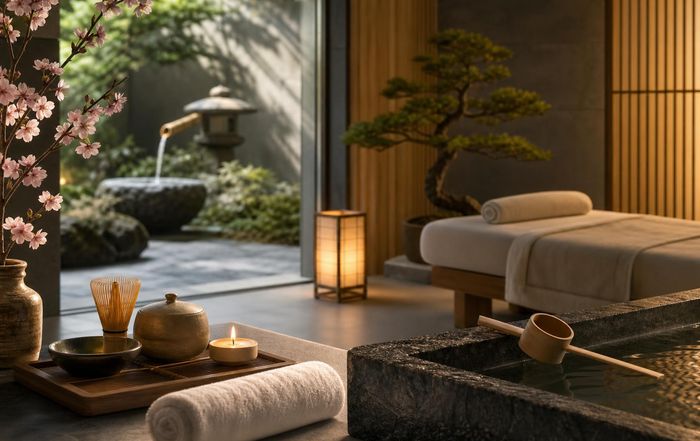
In 2026, spa developers and designers in cities from New York and London to Seoul and Sydney are integrating Japanese-style communal bathing zones into their layouts, often blending local materials with design cues from traditional ryokan and bathhouses. These spaces typically emphasize natural stone, warm wood, and carefully modulated lighting, drawing on Japanese architectural principles of simplicity and harmony that echo the philosophies of wabi-sabi and shibui. For readers exploring spa concepts on QikSpa, particularly within the spa and salon and wellness sections, this evolution illustrates how cultural immersion and design minimalism can coexist with high-end amenities and advanced water treatment technologies.
The social dimension of Japanese bathing is also being reinterpreted in Western and global contexts. While strict nudity norms and gender segregation may not translate directly into every market, the underlying concept of shared, contemplative space is being adapted into co-ed relaxation pools, quiet hydrotherapy circuits, and thermal journeys that encourage guests to slow down, disconnect from devices, and reconnect with their own bodies and thoughts. Hospitality brands referencing guidelines from the World Health Organization and national public health agencies are also borrowing from Japanese standards of cleanliness and etiquette, reinforcing hygiene protocols that have become even more critical in the wake of recent global health challenges.
The Tea Ceremony and the Aesthetics of Mindful Service
Beyond water, one of the most profound Japanese influences on modern spa culture is the chanoyu or tea ceremony, a ritual that has shaped service philosophy far beyond the tearoom. In Japan, the tea ceremony is not simply about drinking matcha; it is a codified choreography of hospitality, presence, and respect, where every gesture, object, and silence is intentional. Contemporary spas in Europe, Asia, and North America are drawing from this tradition to reimagine their welcome rituals, consultation processes, and post-treatment experiences.
Instead of rushed check-ins and transactional interactions, high-end wellness destinations are increasingly offering quiet pre-treatment rituals inspired by Japanese tea culture, such as the presentation of a small seasonal tea, a warm towel, and a moment of guided breathing. These elements mirror the emphasis on ritualized beginnings and endings found in Japanese hospitality and echo the principles of omotenashi, the deeply ingrained ethos of anticipatory, selfless service. Business leaders in hospitality and wellness, referencing insights from institutions such as Harvard Business Review, recognize that these subtle but meaningful rituals can significantly influence perceived value, loyalty, and word-of-mouth advocacy.
For QikSpa, which speaks to both wellness consumers and professionals interested in business and careers in the spa and wellness sector, the tea ceremony provides a powerful model for training teams in mindful presence and emotional intelligence. Rather than treating service sequences as rigid scripts, Japanese-inspired approaches encourage therapists and guest relations professionals to cultivate a calm, attentive demeanor that transforms each interaction into a micro-ritual of care. In an era when guests are increasingly sensitive to authenticity and emotional safety, such practices contribute directly to trustworthiness and brand differentiation.
Zen, Mindfulness, and the Psychology of Space
The influence of Japanese Zen Buddhism and related contemplative practices on global wellness is well documented, and by 2026, the integration of Zen-inspired principles into spa environments has become both more sophisticated and more evidence-informed. Concepts such as zazen (seated meditation), ma (the intentional use of empty space), and kanso (simplicity) are shaping everything from room layouts to soundscapes, as operators seek to reduce cognitive load and support mental restoration.
Psychological research from organizations like the American Psychological Association and academic centers such as the Greater Good Science Center at UC Berkeley has highlighted the benefits of mindfulness, sensory regulation, and exposure to natural elements for stress reduction and emotional balance. Spa architects and experience designers are translating these findings into Zen-influenced environments that favor uncluttered surfaces, neutral color palettes, natural light, and subtle, nature-based sounds over aggressive music or visual stimulation. This design language aligns closely with the expectations of wellness-oriented travelers and urban professionals in markets from Canada and Germany to Singapore and Japan itself.
On QikSpa, where readers explore topics such as health, wellness, and fitness, the Japanese approach to space offers a compelling counterpoint to hyper-stimulating digital lifestyles. Rather than adding more features, screens, or entertainment, Zen-inspired spas intentionally remove friction and noise, creating what might be called "psychological white space" in which guests can rest, reflect, or engage in guided practices like meditation or breathwork. This restraint, rooted in centuries of Japanese aesthetic philosophy, is increasingly recognized as a marker of expertise and maturity in spa design.
Japanese Skincare Rituals and the Evolution of Beauty Services
In the realm of beauty, Japanese influence has been transformative, particularly in the way modern spas conceptualize skincare rituals, product curation, and client education. The global fascination with multi-step routines, gentle formulations, and prevention-oriented care has been shaped not only by Korean trends but also by Japanese philosophies of hada (skin) as a reflection of inner balance and daily discipline. Brands such as Shiseido, SK-II, and Tatcha have helped popularize the idea that skincare is a ritual of self-respect rather than a quick corrective measure, and this perspective is now deeply embedded in spa menus worldwide.
Spas with a strong Japanese influence tend to emphasize meticulous cleansing, layering of hydration, sun protection, and seasonal adjustments, often drawing on botanical ingredients that have long been part of Japanese culture, such as green tea, rice bran, camellia oil, and yuzu. Dermatological organizations like the American Academy of Dermatology and research-driven companies in the beauty sector have underscored the importance of gentle, consistent care and photoprotection, reinforcing the scientific credibility of many traditional Japanese practices. For QikSpa readers exploring beauty and women's wellness, these rituals demonstrate how cultural heritage and modern science can converge in daily routines that support both appearance and long-term skin health.
Moreover, Japanese beauty culture has influenced how spas communicate with clients about aging, moving away from adversarial language toward a more respectful, holistic narrative that values radiance, resilience, and self-acceptance. This shift aligns with broader movements in mental health and body image, supported by organizations such as Mental Health America, which emphasize the psychological impact of beauty messaging. By adopting Japanese-inspired rituals and language, spas are enhancing their authoritativeness and emotional integrity, positioning themselves as allies in self-care rather than purveyors of unrealistic ideals.
Food, Tea, and the Integration of Nutrition into Spa Experiences
Japanese rituals extend far beyond the treatment room into the culinary dimension of spa culture, influencing how wellness destinations approach food, tea, and nutritional education. The traditional Japanese diet, often cited in research on longevity and metabolic health, emphasizes vegetables, fish, fermented foods, and modest portions, and has been associated with lower rates of certain chronic diseases. Organizations such as the World Health Organization and the Harvard T.H. Chan School of Public Health have highlighted aspects of Japanese dietary patterns in their discussions of healthy eating and population health.
In 2026, many spas and wellness resorts are integrating Japanese-inspired menus that prioritize seasonal, minimally processed ingredients, umami-rich broths, and tea pairings that complement treatments and support digestion. For QikSpa, whose audience frequently explores food and nutrition alongside spa and wellness topics, this integration underscores the movement away from isolated services toward holistic lifestyle ecosystems. Guests may experience a thermal circuit modeled on onsen traditions, followed by a light kaiseki-inspired meal, and conclude with a tea ritual that reinforces the themes of balance and mindfulness introduced throughout the day.
The global popularity of matcha, sencha, and other Japanese teas has also influenced beverage offerings in spas from Italy and Spain to the United States and South Africa. Scientific literature summarized by institutions like the National Center for Complementary and Integrative Health has explored the antioxidant properties and potential cardiovascular benefits of green tea, providing an evidence-informed rationale for its inclusion in wellness menus. When presented through thoughtful rituals rather than as a quick commodity, these beverages enhance the sensory narrative of the spa and reinforce its positioning as a place of intentional, health-supportive choices.
Movement, Martial Arts, and the Subtle Power of Japanese Bodywork
Japanese traditions of movement and bodywork have also left a distinct imprint on global spa practices. Modalities such as shiatsu, anma, and Japanese-style reflexology are now staples in many international menus, valued for their structured techniques, focus on meridians or energy pathways, and capacity to induce deep relaxation without excessive oil or undressing. Training frameworks developed by organizations such as the National Certification Board for Therapeutic Massage & Bodywork and various national associations have helped standardize education in these methods, enhancing safety and professional credibility.
In parallel, Japanese martial arts and movement disciplines such as aikido, kyudo, and karate-do have inspired mindful movement classes, posture-focused workshops, and breathing sessions offered within spa and wellness centers. While not always branded explicitly as martial arts, these practices often borrow principles of centeredness, controlled breathing, and efficient movement that align with modern understandings of nervous system regulation and musculoskeletal health. For readers who engage with QikSpa's fitness and yoga content, the convergence of Japanese and other Asian movement traditions offers a rich palette of options for cultivating strength, flexibility, and mental focus in ways that complement more familiar Western exercise modalities.
Spas that thoughtfully incorporate Japanese bodywork and movement tend to invest significantly in therapist training, recognizing that the credibility of these offerings hinges on both technical proficiency and cultural sensitivity. This commitment to expertise and continuous improvement reflects the Japanese concept of kaizen, or ongoing incremental refinement, which has been widely adopted in business and manufacturing circles and is now increasingly visible in the operational philosophies of leading wellness brands worldwide.
Sustainability, Minimalism, and the Japanese Approach to Conscious Luxury
As sustainability becomes a strategic imperative rather than a marketing accessory, Japanese-inspired minimalism and respect for natural resources are informing how spas approach design, sourcing, and operations. Traditional Japanese architecture, with its emphasis on natural materials, modular spaces, and integration with the surrounding landscape, offers a template for low-impact, high-experience environments that resonate with contemporary expectations around climate responsibility and ethical consumption. Organizations such as the World Green Building Council and the Ellen MacArthur Foundation have highlighted the importance of circular design and resource efficiency, concepts that align closely with long-standing Japanese practices of repair, reuse, and thoughtful material selection.
For QikSpa, whose readers increasingly explore sustainable living alongside beauty and wellness, Japanese rituals underscore that true luxury in 2026 is less about excess and more about quality, intentionality, and environmental respect. Spas inspired by Japanese design often favor durable, locally sourced materials, energy-efficient lighting, and water-saving technologies, while still delivering a serene and refined guest experience. This balance between comfort and conscience is particularly appealing to younger guests in Europe, North America, and Asia, who expect brands to demonstrate environmental responsibility as part of their core identity.
Minimalist aesthetics also support operational sustainability by reducing the need for constant refurbishment and decorative turnover. When design is anchored in timeless principles rather than short-lived trends, spas can maintain a consistent brand identity and allocate more resources to staff development, guest education, and community engagement. This long-term orientation, deeply rooted in Japanese culture, enhances both economic resilience and reputational trust.
Globalization, Cultural Sensitivity, and the Role of QikSpa
The globalization of Japanese rituals within spa culture raises important questions about cultural sensitivity, authenticity, and responsible adaptation. As spas in Brazil, South Africa, the Netherlands, and beyond incorporate onsen-inspired pools, Zen gardens, or tea ceremonies into their offerings, industry leaders and cultural commentators emphasize the need to honor origins, collaborate with Japanese experts, and avoid superficial appropriation. Institutions such as UNESCO, which recognizes and protects intangible cultural heritage, provide a broader framework for understanding how traditional practices can be shared and adapted without losing their integrity.
In this evolving landscape, QikSpa plays a fresh distinctive role as a digital hub that connects global readers with nuanced perspectives on international spa trends, travel experiences, and business strategies. By curating in-depth analyses, practitioner insights, and cross-cultural case studies, the platform helps spa owners, therapists, and wellness enthusiasts navigate the fine line between inspiration and imitation. This commitment to informed, respectful storytelling reinforces QikSpa's authority and trustworthiness, particularly among professionals who look to the site for guidance on brand positioning, concept development, and market differentiation across regions from Japan and South Korea to France, the United States, and the wider Asia-Pacific.
Cultural sensitivity also extends to how Japanese-inspired rituals are communicated to guests. Clear explanations, contextual storytelling, and acknowledgment of origins help create a sense of shared appreciation rather than exoticization. When spas integrate these practices into broader wellness narratives that include local traditions and global evidence-based approaches, they contribute to a richer, more inclusive definition of modern spa culture.
The Future of Japanese-Inspired Spa Experiences
Moving along, the influence of Japanese rituals on modern spa culture appears poised not only to continue but to deepen, as technology, research, and cross-cultural collaboration open new avenues for innovation. Digital tools such as virtual reality, biometric monitoring, and AI-driven personalization are being explored by forward-thinking spas and hospitality groups, many of which are seeking to embed these technologies within frameworks informed by Japanese concepts of balance, subtlety, and respect for privacy. Rather than overwhelming guests with data, the most successful implementations are likely to follow the Japanese principle of mottainai, which values restraint and thoughtful use of resources, including information.
For spa brands, consultants, and practitioners who follow QikSpa for independent and well research facts and insights into careers, lifestyle, and strategic positioning, Japanese rituals offer more than a set of treatments or design motifs; they provide a coherent philosophy that can guide decision-making across guest experience, staffing, sustainability, and community engagement. Whether in a boutique urban spa in London, a destination retreat in New Zealand, a wellness hotel in Germany, or a hybrid medical-wellness clinic in Canada, the principles of ritual, mindfulness, simplicity, and respect can shape environments where guests feel genuinely cared for and empowered.
As the spa and wellness sector navigates an increasingly complex global landscape-marked by demographic shifts, economic uncertainty, and heightened awareness of mental health-the enduring wisdom embedded in Japanese traditions offers a stable anchor. By integrating these rituals with contemporary science, local culture, and ethical business practices, modern spas can create experiences that are not only beautiful and relaxing but also meaningfully transformative. In doing so, they align with the core mission that underpins QikSpa and its growing loving community: to elevate wellness from a discretionary indulgence to a trusted, holistic pathway toward healthier, more balanced lives across continents and cultures.
