
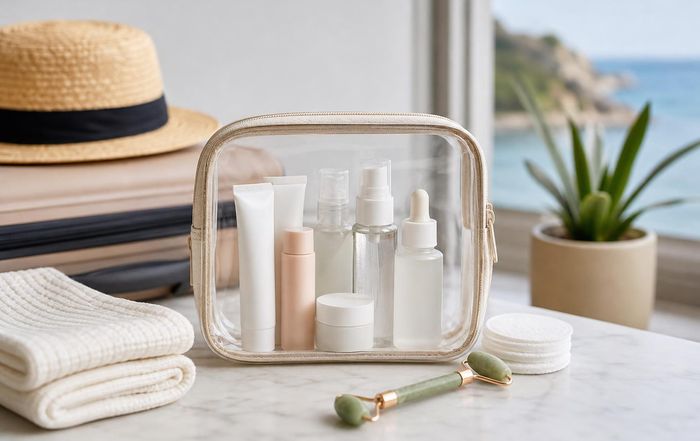
How to Build a Travel Skincare Kit That Actually Works
Packing for a trip often starts with outfits and ends with a last-minute sweep of the bathroom counter. That's usually how half-used cleansers, random samples, and too many "just in case" products end up in your bag. A smarter approach is to build a travel skincare kit that is compact, climate-aware, and tailored to your skin's real needs, whether you are heading to a beach resort, a business trip in a polluted city, or a long-haul flight. So this calming guide breaks down how to design a minimalist but effective travel routine, what to decant and what to buy in mini sizes, how to adapt to different climates and water quality, and how to stay within airline regulations without sacrificing your skin barrier.
Start With Your At-Home Routine
A travel kit should be a streamlined version of what already works for your skin, not a time to experiment with lots of new actives. Dermatology guidance from organizations like the American Academy of Dermatology highlights consistency and barrier support as the foundation of healthy skin, which becomes even more important under the stress of travel, jet lag, and changing environments.
Begin by listing your daily skincare at home in order of use: morning and night. Most people's effective routines fall into a few core categories: cleanser, treatment (like antioxidants or exfoliants), moisturizer, and sunscreen. Look at each step and ask whether it is essential for keeping your skin clean, hydrated, and protected, or whether it is more of a "nice to have." For short trips, anything that is purely indulgent or used less than twice a week-like strong peels, multiple masks, or several serums with overlapping benefits-can usually stay home.
For many travelers, a solid travel routine can be reduced to: a gentle cleanser, one multitasking serum, a reliable moisturizer, and a broad-spectrum sunscreen. Those four products, chosen well, will do more for your skin than a suitcase full of mismatched minis. This minimalist approach also fits well with a more intentional wellness mindset, freeing space and mental energy for the actual trip.
Know the Rules: Liquids, Sizes, and Security Checks
Before choosing formats, it helps to understand typical airline and security rules. In many regions, including the US and much of Europe, carry-on liquids are limited to containers of 100 ml (3.4 oz) or less, placed together in a clear, resealable bag. Official sources like the Transportation Security Administration in the US and the European Union Aviation Safety Agency outline similar restrictions, which apply to skincare, makeup, and even some solid products that can melt, such as balms.
To avoid airport stress, decide early whether your skincare will travel in your carry-on, checked luggage, or a combination. If you often travel carry-on only, prioritize products available in smaller sizes or ones you can safely decant into leak-proof travel containers. Solid cleansers and moisturizers can sometimes bypass liquid limits, but always check your airline and local security authority in case of updated rules.
It's also wise to separate "in-flight" skincare-what you'll access during the journey-from the rest of your kit. A tiny in-flight pouch might hold lip balm, hand cream, a hydrating mist or serum, and travel-size sunscreen, while bulkier items stay in your main bag. This division keeps essentials close without rummaging through your entire luggage in a cramped cabin, and helps protect more delicate products from being opened and closed repeatedly.
The Non-Negotiables: Core Products Every Travel Kit Needs!
Most skin types, regardless of age or gender, will benefit from a few universal essentials. These form the backbone of a travel skincare kit that can handle changes in climate, air quality, and water.
A gentle, low-foam cleanser is crucial to remove sunscreen, sweat, and pollution without stripping the skin barrier. Dermatology organizations such as the British Association of Dermatologists emphasize avoiding harsh surfactants and over-cleansing, especially when the skin is already stressed by dry cabin air or environmental changes. If you wear heavy sunscreen or makeup, consider a mini cleansing balm or oil as a first step and a gel or cream cleanser as a second step, but you can often choose one formula that removes both when massaged thoroughly and rinsed well.
Next, a broad-spectrum sunscreen of at least SPF 30 (often SPF 50 for high UV destinations or outdoor-heavy itineraries) is non-negotiable. Agencies like the World Health Organization and American Academy of Dermatology consistently highlight sunscreen as one of the most effective tools for preventing photoaging and reducing skin cancer risk. For travel, choose a texture you will actually reapply: a lightweight fluid for humid climates, a richer cream for dry or cold weather, or even a stick for easy top-ups on the go. If you'll be swimming, look for water-resistant formulas and reapply as directed.
Hydration completes the core trio. A simple, fragrance-free moisturizer that works both day and night is often enough, especially when paired with a hydrating serum containing humectants like glycerin or hyaluronic acid. This is where many travelers overpack; one well-chosen cream can usually replace separate "day" and "night" products. For those interested in a broader beauty and lifestyle approach, this kind of multipurpose thinking reduces clutter while still feeling indulgent.
Choosing Formats: Mini, Full-Size, Solid, or Refillable?
Once you know your essentials, the next question is how they should travel. There is no single right answer, but a few principles can keep your kit practical and planet-conscious.
Travel-size versions from your usual brands are convenient, but not always cost-effective or environmentally friendly. Refillable containers can be a better option: decanting your regular cleanser or moisturizer into 30-50 ml bottles is often enough for trips of one to two weeks, and you avoid buying new packaging each time. When choosing containers, look for sturdy, leak-proof designs with tight caps and, ideally, labels you can write on to avoid mix-ups. Some travelers also prefer airless pump bottles for serums to reduce contamination.
Solid bars and sticks-like solid cleansers, moisturizers, or even sunscreen-are appealing because they don't count as liquids under many security rules and can reduce leak risk. However, they may feel different on the skin, and some contain higher levels of fragrance or surfactants. If you're curious about solid products, test them at home for at least a week before relying on them during travel. This ties into a broader sustainable mindset, as solid formats often use less plastic and can be more concentrated.
Consider also the climate and length of your trip. For a weekend city break, sample sachets or minis may be enough and keep your bag light. For longer journeys, especially where buying replacements will be difficult or expensive, slightly larger refillable bottles make more sense. Whatever you choose, double-bag liquids in a small waterproof pouch to protect clothing, and avoid filling containers completely to allow for expansion during flights.
Tailoring Your Kit to Climate and Destination
A travel skincare kit that works in a dry alpine winter may fail in a humid tropical city. Adapting your products to the destination's climate, UV index, and even water hardness can make a noticeable difference in how your skin behaves on the road.
In hot, humid climates, lightweight, non-comedogenic textures are typically more comfortable. Gel cleansers and fluid moisturizers or gel-creams help prevent a greasy feel while maintaining hydration. Those prone to breakouts may benefit from one targeted treatment product, such as a salicylic acid spot treatment, but it is usually better to avoid starting aggressive new acne regimens during travel. A mattifying but hydrating sunscreen can reduce shine without overdrying, and blotting papers are more travel-friendly than multiple powders.
In cold or dry environments, including many winter destinations and heavily air-conditioned hotels, the skin's barrier can become compromised quickly. Here, a richer cream or balm, possibly with ceramides or occlusive ingredients like petrolatum, can prevent flaking and tightness. A hydrating serum with humectants layered under your moisturizer can be particularly helpful, and a gentle, low-foam cleanser is essential to avoid stripping already dry skin. Official guidance from bodies like the National Eczema Association often emphasizes barrier repair and fragrance-free formulas in these conditions, which can also benefit non-eczema-prone travelers.
Urban destinations with high pollution may warrant extra antioxidant support. A vitamin C or multi-antioxidant serum used in the morning under sunscreen can help address free radical damage from UV and pollution, a position reflected in many dermatology and research overviews from institutions such as Harvard Health Publishing and Mayo Clinic. However, if your skin is sensitive, choose stabilized, gentle formulas and test them at home first. At night, double cleansing (or a thorough single cleanse with a well-formulated product) becomes more important to remove particulate matter and sunscreen.
Water quality can also affect skin. Hard water, common in many cities, can leave mineral deposits that disrupt the skin barrier, especially for those with sensitive or eczema-prone skin. If you know you react poorly to hard water, consider bringing a no-rinse micellar water for a final wipe, or at least finishing your cleanse with a spritz of thermal water or bottled water before patting dry. While these steps are not essential for everyone, they can make a difference for reactive skin.
Smart Multitaskers: Do More With Fewer Products
Travel is an ideal time to embrace multitasking products that deliver several benefits in one step. This not only saves space but simplifies your routine when you are tired, jet-lagged, or sharing a small bathroom.
A moisturizer with added antioxidants or soothing ingredients can sometimes replace a separate antioxidant serum and a separate calming product. For example, a fragrance-free cream containing niacinamide can support barrier function, help even tone, and soothe redness for many skin types. Similarly, a tinted mineral sunscreen can double as light makeup, reducing the need to pack foundation or BB cream. For those who prefer a polished look, pairing a good sunscreen with a single multi-use color product for cheeks and lips can significantly shrink a makeup bag, aligning with a more streamlined beauty and fashion approach.
Cleansing balms that effectively remove makeup and sunscreen while rinsing clean can eliminate the need for separate makeup removers. Just ensure the balm does not leave a heavy film that clogs pores, especially in hot climates. A gentle exfoliating toner used once or twice a week can stand in for more intensive masks or scrubs, but be cautious about over-exfoliating when your skin is already stressed by travel.
Multi-use balms can serve as lip balm, cuticle cream, and a spot treatment for dry patches on the face or body. Some travelers also use them to tame brows or flyaway hair in a pinch. These small, concentrated products are often ideal for a compact travel kit. As always, test them at home first, especially if you have a history of breakouts or sensitivity.
Adjusting Active Ingredients While You're Away
If your regular routine includes strong actives-such as prescription retinoids, high-strength exfoliating acids, or multiple targeted serums-it may be wise to simplify while traveling. Environmental stressors, disrupted sleep, and varying humidity can all make skin more reactive, and access to your usual dermatologist or products may be limited.
For many people, maintaining a lower but consistent dose of actives is better than stopping everything abruptly or trying new, potent products on the road. For example, if you use a prescription retinoid nightly at home, you might reduce to every other night during a sunny beach holiday, and be especially diligent with SPF and sun avoidance, in line with guidance from dermatology bodies such as the American Academy of Dermatology. Similarly, if you use strong glycolic or salicylic acid exfoliants, consider cutting back to once a week or replacing them with milder options to avoid irritation.
Those with conditions like acne, rosacea, or melasma should consult their dermatologist before a long trip, especially if crossing time zones or visiting high-UV destinations. An advance plan may include travel-size versions of key medications, advice on adjusting application frequency, and strategies for flare-up management. For melasma-prone skin, sun protection becomes especially critical, including broad-spectrum sunscreen, hats, and shade, as emphasized by organizations like the Skin Cancer Foundation.
If you do choose to pause certain actives for a short trip, focus instead on barrier support: gentle cleansing, hydrating serums, and moisturizers rich in ceramides, cholesterol, and fatty acids. This approach supports skin resilience so that when you return to your full routine, your skin is less likely to react.
In-Flight Skincare: Surviving Dry Cabin Air
Long flights are notoriously dehydrating. Low humidity in airplane cabins-often below what is typical in deserts-can increase transepidermal water loss from the skin and lips. A simple in-flight routine can reduce tightness and post-flight dullness without disrupting other passengers or requiring a full bathroom ritual.
Before boarding, cleanse your face, apply a hydrating serum, a rich but non-greasy moisturizer, and a generous layer of sunscreen if you will be near a window during daylight hours. Some dermatologists note that UV levels can be significant at cruising altitude, especially on daytime flights, so window-seat travelers may prefer to keep the shade down and reapply sunscreen periodically.
During the flight, a small kit with lip balm, hand cream, and a mini hydrating mist or serum can be helpful. Rather than repeatedly applying sheet masks or heavy oils, which can sometimes trap dirt and irritants on the skin, a light reapplication of moisturizer when your skin feels tight is usually sufficient. Drink water regularly, but be cautious about overdoing salty snacks and alcohol, both of which can contribute to overall dehydration, a theme that also connects to broader health and food and nutrition habits while traveling.
Once you land, cleanse thoroughly to remove any buildup, then apply a soothing moisturizer. If you arrive at night, you can skip actives and allow your skin to rest. If you arrive during the day and will be outdoors, reapply sunscreen after cleansing and moisturizing.
Special Considerations: Sensitive, Acne-Prone, and Mature Skin
Different skin types have specific needs that become more pronounced during travel. Sensitive or reactive skin benefits from an especially minimalist, fragrance-free kit. Avoid introducing new actives or highly fragranced products right before or during a trip, and consider packing a small, dermatologist-recommended barrier repair cream or ointment in case of flare-ups. Official resources from groups like the National Eczema Association and similar organizations worldwide often list gentle, approved products and ingredients that can guide your choices.
Acne-prone skin can be more unpredictable under stress and climate changes. Stick to non-comedogenic, oil-free or low-oil formulas where appropriate, and include one proven acne treatment-such as a benzoyl peroxide or salicylic acid product-rather than several overlapping options. Over-cleansing and over-exfoliating in an attempt to "fix" breakouts often backfires, leading to irritation and more inflammation. A balanced approach that prioritizes consistent cleansing, hydration, and a single targeted treatment tends to be more sustainable.
Mature skin, which may already have a drier barrier and be more prone to pigmentation changes, often does well with richer moisturizers and diligent sun protection. Antioxidant serums and retinoids can still be used, but consider adjusting frequency in very sunny or harsh environments, and always pair them with broad-spectrum sunscreen and protective clothing. Institutions like Mayo Clinic and Harvard Health Publishing frequently highlight that, for aging concerns, sun avoidance and regular SPF use are as important as any single active ingredient.
Those undergoing specific medical treatments, such as chemotherapy or isotretinoin, should follow the guidance of their healthcare team closely, as skin can become extremely sensitive, and standard travel advice may not apply. In such cases, it is especially important to carry any recommended products and prescriptions in your hand luggage and to keep routines very gentle.
Organizing, Packing, and Keeping It Hygienic
A well-organized kit not only saves time but also reduces the chance of spills, contamination, or forgetting key products. Consider a compact, wipeable toiletry bag with separate compartments or clear pouches. One section can hold daily essentials (cleanser, serum, moisturizer, sunscreen), another can store occasional-use items (exfoliant, masks, spot treatments), and a third can be reserved for in-flight or quick-access products.
To maintain hygiene, avoid dipping fingers repeatedly into open jars, especially in shared bathrooms or during long trips. If you prefer jars, small spatulas that can be wiped or washed are a simple solution. Pump bottles and squeeze tubes are often more hygienic and travel-friendly. Try not to top up half-used travel bottles with fresh product repeatedly without washing and drying them; instead, clean containers between trips to avoid bacterial buildup.
Label decanted products clearly with product name and usage (for example, "AM serum," "night cream," or "SPF 50"). In unfamiliar hotel lighting or when tired, it is easy to confuse similar-looking liquids. If you are crossing multiple time zones or juggling work and leisure, a simple label can prevent using strong actives at the wrong time of day or mistaking a cleanser for a moisturizer.
Finally, keep a short written or digital checklist of your travel skincare basics. Before each trip, run through it quickly: cleanser, moisturizer, sunscreen, any prescription products, lip balm, hand cream, and one or two optional extras like a mask or exfoliant. This small habit can prevent last-minute bathroom sweeps and help you maintain a calm, consistent wellness rhythm, even when everything else about travel feels unpredictable.
Building a travel skincare kit that works is less about buying special products and more about editing thoughtfully, respecting your skin type, and adapting to where you are going. With a handful of well-chosen essentials and a realistic routine, your skin can stay comfortable and resilient-leaving you free to focus on the experiences, not the mirror.
