
Creating a Luxurious At-Home Spa Ritual
You know the concept of luxury has shifted from being defined solely by exclusive destinations and high-end products to being measured increasingly by the quality of time, attention and care individuals are able to give themselves on a regular basis, and nowhere is this evolution more visible than in the way discerning consumers in the United States, Europe, Asia and beyond are reimagining their homes as personalized wellness sanctuaries. For the calm and smart audience here and its community of health-conscious professionals and lifestyle leaders, creating a luxurious at-home spa ritual is no longer a mere indulgence reserved for rare occasions, but a strategic, evidence-informed practice that supports long-term health, beauty, performance and emotional resilience in a volatile world.
The New Meaning of Luxury: Time, Presence and Wellbeing
The modern spa consumer in 2026 is better informed than ever, with access to scientific research, digital wellness platforms and global trends that highlight the profound connection between stress, inflammation, sleep quality and overall health. Organizations such as the World Health Organization have continued to emphasize the burden of stress-related conditions and mental health challenges on populations worldwide, and readers who follow global health developments understand that personal wellbeing is now a critical component of sustainable productivity and career longevity. Learn more about how stress affects health on the World Health Organization website.
In this context, the at-home spa ritual is not positioned merely as a cosmetic exercise, but as an integrated part of a holistic lifestyle that includes nutrition, movement, emotional balance and preventive care. Visitors exploring the broader wellness content on QikSpa, including its curated insights on health and wellness, increasingly view these rituals as a strategic investment in their long-term vitality and as a way to bring the essence of world-class spa and salon experiences into their daily routines, regardless of whether they live in New York, London, Berlin, Singapore, Sydney or Cape Town.
Designing the Space: Transforming the Home into a Sanctuary
A truly luxurious at-home spa ritual begins not with products, but with environment, and sophisticated consumers in markets such as the United States, United Kingdom, Germany, Canada and Japan understand that sensory design has a direct impact on the nervous system. Research shared by institutions like Harvard Medical School has reinforced how light, noise and clutter can influence stress levels and sleep quality, and those who wish to deepen their knowledge can explore relevant insights from Harvard Health Publishing.
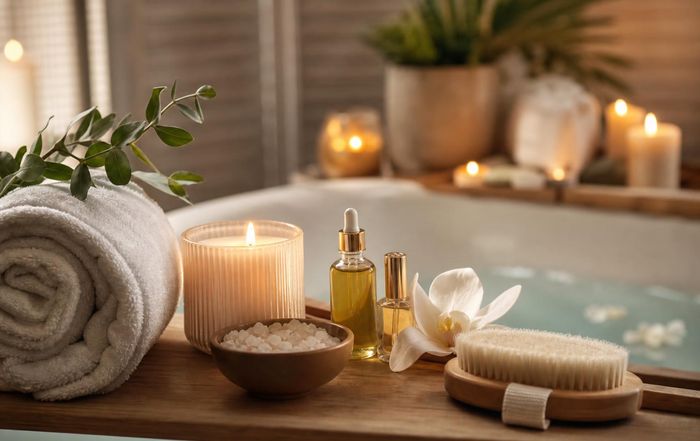
For the QikSpa reader, creating an at-home spa environment means approaching the bathroom, bedroom or dedicated wellness corner with the same intentionality that a luxury spa architect would bring to a flagship property in Paris, Dubai or Bangkok. This includes considering the color palette, opting for calming neutrals or soft earth tones; minimizing visual clutter; integrating soft, indirect lighting instead of harsh overhead bulbs; and incorporating natural materials such as wood, stone and cotton to create a tactile sense of grounding. Those interested in broader lifestyle design principles can connect this approach with the inspiration available on QikSpa's lifestyle section, where the integration of aesthetics and wellbeing is a recurring theme.
Sound and scent are equally vital in shaping a spa-like atmosphere. Many of the world's leading wellness resorts collaborate with sound therapists and perfumers to curate signature soundtracks and aromatherapy profiles that support relaxation, and individuals at home can emulate these strategies by using high-quality speakers to play nature soundscapes or gentle instrumental music, and by selecting essential oil blends or naturally scented candles that are free from harsh synthetic fragrances. Guidance on safe and evidence-based aromatherapy practices can be found through organizations such as the National Center for Complementary and Integrative Health, and readers can explore more about integrative approaches on the NCCIH site.
Curating Professional-Grade Spa and Salon Treatments at Home
The global spa and salon sector has evolved rapidly, and by 2026, discerning clients in regions from North America and Europe to Asia and the Middle East expect professional-grade results even when they are not visiting a physical spa. For QikSpa, which has long highlighted the intersection of luxury, efficacy and innovation in its spa and salon coverage, the at-home spa ritual is an opportunity to translate the best of professional protocols into a curated, personalized sequence.
High-performing skincare has become a cornerstone of this transformation, with dermatologists and aesthetic experts in cities such as Los Angeles, Seoul, Tokyo and Milan emphasizing the importance of evidence-based ingredients like retinoids, vitamin C, niacinamide and peptides. Those who want to deepen their understanding of ingredient science frequently consult resources from The American Academy of Dermatology, where they can learn more about dermatology-recommended skincare and align their home routines with medically backed guidance. A luxurious at-home facial might begin with a gentle double cleanse, followed by an exfoliating mask, a hydrating serum and a targeted treatment mask, all applied with slow, mindful movements that turn ordinary skincare into a sensory ritual.
Hair and scalp care, long underemphasized compared to facial skincare, have moved into the spotlight as global consumers recognize the role of scalp health in hair density, shine and longevity. Professional stylists and trichologists in markets such as the United Kingdom, South Korea and Brazil increasingly recommend regular at-home scalp massages with nourishing oils, combined with bond-repairing treatments and gentle cleansing routines. Those seeking authoritative hair care insights often consult the Mayo Clinic, which offers accessible information on hair and scalp conditions; readers can explore relevant guidance on the Mayo Clinic site to align their at-home treatments with clinical best practices.
Integrating Health, Wellness and Beauty into a Single Ritual
What distinguishes a truly luxurious at-home spa ritual in 2026 is the way it weaves together health, wellness and beauty into a single, coherent experience rather than treating them as separate categories. The readers of QikSpa, who already engage deeply with the platform's content on beauty, fitness and food and nutrition, understand that topical treatments are only one part of the equation, and that the skin, hair and body often mirror internal balance or imbalance.
Hydration, for example, plays a critical role in skin elasticity, cognitive performance and energy levels, and organizations like the Centers for Disease Control and Prevention provide foundational guidance on healthy hydration habits and their impact on wellbeing. Readers who want to deepen their understanding of these principles can explore hydration and health information on the CDC website. In an at-home spa context, this means not only sipping herbal teas or infused water during a ritual, but also recognizing that consistent daily hydration supports the outcomes of luxurious masks, serums and body treatments.
Nutrition is another pillar that underpins the visible results of any beauty or spa regimen. International bodies such as the Food and Agriculture Organization of the United Nations have highlighted the importance of nutrient-dense diets rich in whole foods, healthy fats, lean proteins and antioxidants for long-term health and resilience, and individuals who wish to align their spa rituals with internal nourishment can learn more about global nutrition guidance to inform their everyday choices. For the QikSpa community, this may translate into pairing a Sunday evening facial with a thoughtfully prepared, antioxidant-rich meal, or using the calm of a bath ritual as a moment to plan balanced menus for the week ahead.
The Role of Fitness and Movement in the Spa Experience
While many people associate spa rituals primarily with stillness and relaxation, the most advanced wellness destinations in Europe, Asia and North America have long integrated movement into their offerings, recognizing that circulation, lymphatic flow and muscular balance are essential for both health and aesthetics. In 2026, sophisticated consumers are increasingly recreating this integrated model at home, combining gentle fitness practices with their spa routines to amplify results.
Dynamic stretching, low-impact strength training and mindful movement sessions can be scheduled immediately before or after a bath, sauna or body treatment to support detoxification and recovery, and those seeking authoritative guidance on physical activity can refer to organizations such as the World Health Organization, which continues to publish global recommendations on movement for different age groups and lifestyles. Readers can explore these physical activity guidelines on the WHO physical activity pages and adapt their at-home rituals accordingly.
For the QikSpa audience, which frequently explores content on fitness and performance, the luxurious at-home spa ritual becomes a natural extension of their training routines, particularly for professionals balancing demanding careers in cities from Toronto and Amsterdam to Singapore and Seoul. A post-workout spa sequence might include contrast showers, self-massage with recovery balms and a dedicated stretching session, transforming what could be a purely functional recovery into a multi-sensory, restorative experience that supports both physical and mental regeneration.
Yoga, Breathwork and the Nervous System
Yoga and breathwork have moved from niche practices to mainstream pillars of global wellness, with studios and teachers across the United States, Europe, India and Southeast Asia emphasizing their impact on the autonomic nervous system and stress resilience. In 2026, individuals who create luxurious at-home spa rituals increasingly integrate these practices not as optional extras, but as central components of their experience, recognizing that true luxury includes a calm, focused mind.
Scientific interest in breathwork has grown significantly, with institutions such as Stanford Medicine exploring the physiological effects of controlled breathing on heart rate variability, anxiety and sleep, and those who wish to explore this research can visit Stanford Medicine for further reading. Incorporating simple breathing sequences before or after a bath, facial or body treatment can deepen relaxation, improve oxygenation and enhance the perceived quality of the entire ritual.
For readers of QikSpa who are already exploring yoga as part of their lifestyle, the at-home spa environment offers an ideal setting for gentle restorative postures, guided meditations and mindfulness practices. Whether in a compact apartment in Tokyo, a townhouse in London or a coastal home in New Zealand, a small corner with a mat, bolster and candles can become a powerful sanctuary where physical, mental and emotional tensions are released, allowing beauty and wellness treatments to work more effectively.
Fashion, Textiles and the Aesthetics of Comfort
Luxury is communicated not only through treatments and products, but also through the textiles, garments and accessories that frame the spa experience, and in 2026, the fashion-conscious wellness consumer is increasingly attentive to the tactile and visual cues that shape their rituals. Soft, high-quality robes, organic cotton towels, silk eye masks and carefully chosen loungewear contribute to a sense of ceremony and signal to the brain that it is time to transition from productivity mode into restoration.
The intersection of fashion and wellness has become a vibrant space, with designers in Italy, France, Spain and Scandinavia exploring fabrics and silhouettes that support both comfort and aesthetics. Sustainability has emerged as a key priority, and organizations like the Ellen MacArthur Foundation are leading the conversation on circular textiles and responsible production; those who want to understand the future of sustainable fashion can learn more about circular fashion systems and align their at-home spa wardrobe with their environmental values. For QikSpa readers, the platform's fashion and sustainable sections provide additional context on how to select garments and accessories that are both elegant and ethically produced.
The aesthetics of comfort extend beyond clothing to include slippers, hair accessories, headbands and even the design of cosmetic tools, all of which contribute to a cohesive, elevated sensory experience. When every element, from the robe to the bath tray, has been chosen with intention, the at-home spa ritual feels less like a quick routine and more like a private, luxurious retreat that could rival a five-star spa in Zurich, Dubai or Singapore.
Global Inspirations: International Spa Traditions at Home
One of the advantages of living in a hyper-connected world is the ability to draw inspiration from diverse spa and wellness traditions across continents, and in 2026, sophisticated consumers in North America, Europe, Asia, Africa and South America are increasingly weaving global practices into their at-home rituals. For the international audience of QikSpa, which explores global trends through dedicated international and travel content, this cross-cultural curiosity is a natural extension of their lifestyle.
From the hammam rituals of Morocco and Turkey, with their emphasis on steam, exfoliation and deep cleansing, to the onsen culture of Japan, which celebrates mineral-rich hot springs and mindful bathing, each tradition offers principles that can be adapted to domestic bathrooms and wellness spaces. Scandinavian sauna culture, with its alternating heat and cold exposure, has gained particular prominence in wellness communities in Sweden, Norway, Finland and beyond, and organizations like Visit Finland provide cultural context on sauna as a social and health practice; interested readers can explore Finnish sauna traditions to inform their own heat-based rituals at home.
Similarly, Ayurvedic practices from India, such as abhyanga self-massage with warm oils, and Thai spa traditions involving herbal compresses and stretching, have inspired new product lines and protocols that can be integrated into at-home routines. As global travel resumes and evolves, many professionals return from wellness-focused journeys to destinations like Bali, Thailand, Costa Rica and South Africa with new ideas for rituals, scents and treatments, which they then reinterpret in their own homes, blending global wisdom with local resources.
Careers, Business and the Strategic Value of Self-Care
For many readers of QikSpa, particularly those in leadership roles across industries in the United States, United Kingdom, Germany, Singapore, Australia and beyond, the at-home spa ritual is not only a personal pleasure but also a strategic tool that supports sustained performance, creativity and decision-making. The conversation around self-care has matured, moving beyond slogans to a more nuanced understanding of how rest and recovery influence cognitive function, emotional regulation and long-term career resilience.
Organizations such as McKinsey & Company and the World Economic Forum have, in recent years, published insights on burnout, mental health and the future of work, highlighting the importance of sustainable performance strategies for executives and knowledge workers. Those interested in the business case for wellbeing can explore perspectives on workplace mental health and consider how structured at-home spa rituals might contribute to their personal sustainability. For the QikSpa community, which also engages with content on business and careers, the at-home spa becomes a practical mechanism to decompress after high-stakes negotiations, demanding travel schedules or intense creative projects.
By framing luxurious rituals as part of a broader professional strategy rather than as guilty pleasures, individuals in finance, technology, healthcare, hospitality and creative industries across North America, Europe, Asia and Africa can normalize consistent self-maintenance, thereby reducing the risk of burnout and enhancing their capacity to lead, innovate and support their teams.
Sustainability and Ethical Luxury in At-Home Spa Rituals
The global wellness industry has undergone a profound shift toward sustainability and ethical responsibility, and in 2026, discerning consumers in markets from Canada and the Netherlands to South Korea and New Zealand are increasingly unwilling to separate personal luxury from planetary wellbeing. For QikSpa, whose sustainable content reflects this evolution, creating a luxurious at-home spa ritual means making conscious choices about products, energy use, packaging and sourcing.
Environmentally aware individuals are now examining ingredient lists to avoid harmful chemicals, seeking certifications such as COSMOS or Ecocert, and choosing brands that are transparent about sourcing, manufacturing and labor practices. Organizations like the Environmental Working Group provide databases and tools that help consumers evaluate the safety and environmental impact of personal care products; those who wish to align their spa rituals with cleaner formulas can explore resources on the EWG website. Water usage has also become a consideration, with many people balancing their love of long baths with a commitment to conservation by limiting frequency, reusing greywater where possible or investing in more efficient fixtures.
Packaging reduction, recycling and support for companies using refill systems or biodegradable materials are additional ways in which consumers in cities from Zurich and Copenhagen to Johannesburg and São Paulo are reconciling luxury with responsibility. Ethical luxury, in this context, is defined not only by the quality of textures and scents, but by the integrity of the supply chain and the long-term impact on ecosystems and communities.
Centering Women's Wellness and Inclusive Luxury
Women around the world, from the United States and United Kingdom to India, China, Brazil and South Africa, remain at the forefront of wellness innovation and consumption, and in 2026, there is growing recognition of the need for at-home spa rituals that acknowledge the unique physiological and psychological experiences women navigate across life stages. For the QikSpa audience, which engages deeply with content dedicated to women, this includes rituals tailored to menstrual cycles, fertility journeys, pregnancy, postpartum recovery, perimenopause and menopause, each with specific needs in terms of temperature regulation, ingredient sensitivity, circulation and emotional support.
Medical organizations such as The American College of Obstetricians and Gynecologists provide evidence-based guidance on women's health topics, and those who wish to integrate spa rituals safely with their health journeys can consult ACOG resources to better understand any contraindications or best practices. Inclusive luxury also means recognizing the diverse cultural, racial and socioeconomic backgrounds of women worldwide, and ensuring that at-home spa concepts are adaptable to different housing situations, budgets and access to products, while still delivering a sense of dignity, beauty and care.
Beyond gender, the future of luxurious at-home spa rituals is increasingly inclusive of all ages, body types, abilities and identities, with a focus on customization rather than one-size-fits-all prescriptions. This aligns with the broader mission of QikSpa, which, as a global platform at qikspa.com, seeks to provide insights and inspiration that can be tailored to the realities of readers in New York, London, Berlin, Toronto, Sydney, Paris, Rome, Madrid, Amsterdam, Zurich, Shanghai, Stockholm, Oslo, Singapore, Copenhagen, Seoul, Tokyo, Bangkok, Helsinki, Johannesburg, São Paulo, Kuala Lumpur, Auckland and beyond.
Bringing It All Together: A Personal, Luxurious Ritual for Modern Life
Creating a luxurious at-home spa ritual has become both an art and a science, blending global spa traditions with dermatological research, integrative health insights, sustainable design and a deep understanding of human psychology. For the international business and lifestyle audience here, the home spa is no longer a secondary substitute for professional treatments, but a primary space where daily stress is transformed, inner and outer beauty are nurtured and long-term wellbeing is actively cultivated.
Whether a reader is a senior executive in New York, a creative entrepreneur in Berlin, a technology leader in Singapore or a wellness professional in Cape Town, the principles remain consistent: design a calming environment, choose evidence-based treatments, integrate movement and breath, honor nutrition and hydration, select textiles and garments that elevate comfort, draw inspiration from global traditions, prioritize sustainability and tailor the ritual to personal health needs and life stage. In doing so, individuals transform their homes into sanctuaries that support not only appearance, but resilience, clarity and purpose in an increasingly complex world.
As we continue to explore the evolving connections between spa, health, wellness, beauty, nutrition, fitness, yoga, fashion, international culture, travel, careers, business, lifestyle, sustainability and women's wellbeing, the at-home spa ritual stands out as a tangible, daily expression of these values. It is a reminder that in a time of rapid change, one of the most powerful forms of luxury remains the ability to pause, breathe and care for oneself with intention, intelligence and grace.
